We’ve upgraded Alisouq for a faster, smoother experience
SKU: RABMT-SCHNEIDER-LRD06
(incl. VAT)
loading...
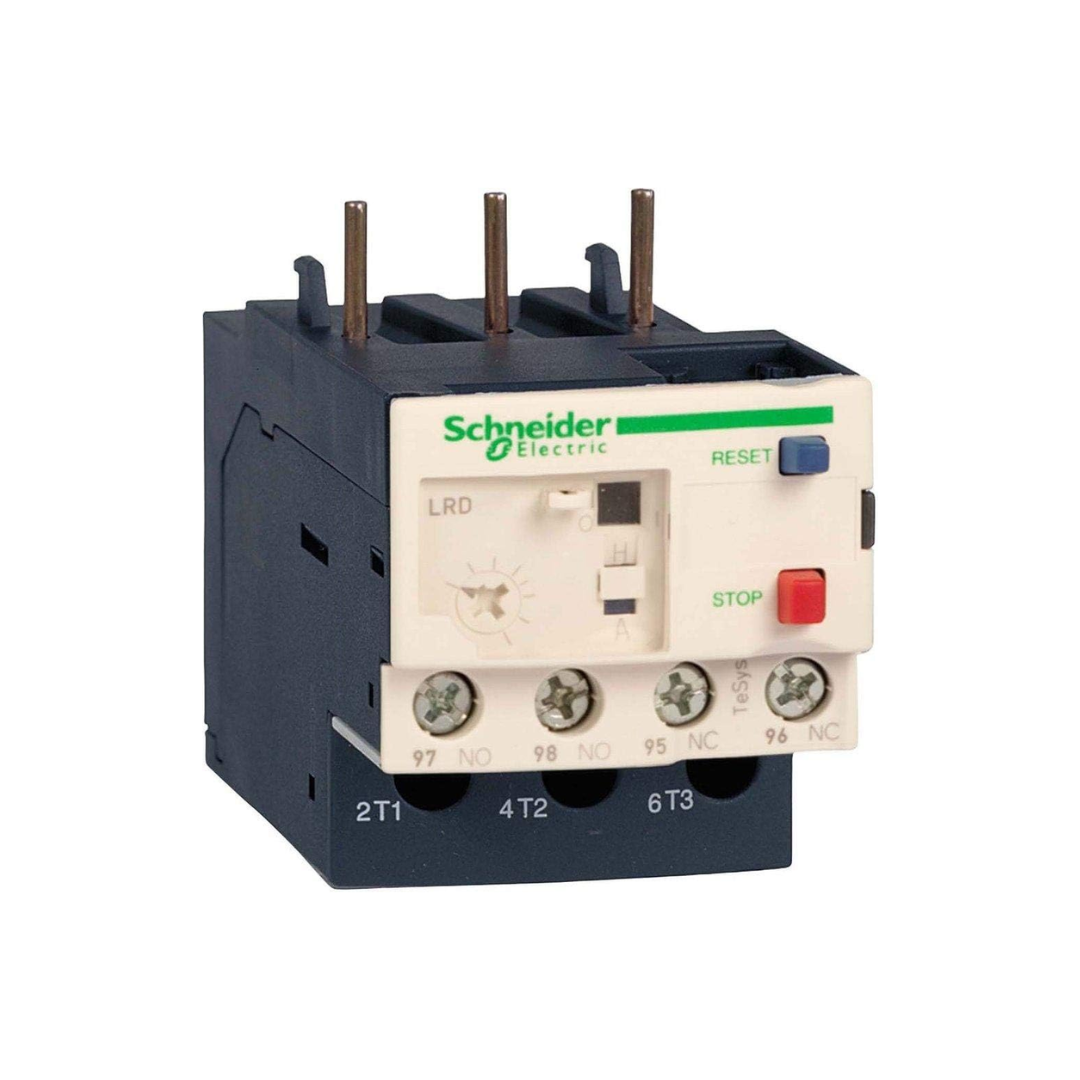
The Schneider Electric LRD06 is an Overload Relay designed for use in motor protection applications. It is specifically rated for current ranges between 1 ampere (A) and 1.6 amperes (A). The LRD06 Overload Relay is a protective device used to monitor the current drawn by a motor. Its primary function is to provide overload protection by detecting when the motor's current exceeds a predetermined threshold. The relay is rated for a current range between 1 ampere (A) and 1.6 amperes (A). This means it can handle motors with currents in this specific range.
The LRD06 protects electric motors from damage caused by overcurrents, which can occur due to various factors such as mechanical jams, voltage fluctuations, or other abnormal operating conditions. The relay allows for adjustable current settings within the specified range. This feature allows it to be tailored to specific motor and application requirements. In case of an overload trip, the LRD06 usually incorporates a manual or automatic reset mechanism.
The relay needs to be reset after the overload condition is cleared to restore motor operation. The Schneider Electric LRD06 is typically mounted on motor control panels or switchgear. It is installed in series with the motor circuit and is connected to the motor's power supply. Overload relays like the LRD06 use a bimetallic thermal element to sense the motor's current. The bimetallic element expands when heated due to excess current, causing the relay to trip and disconnect the motor from the power supply.
The relay is rated for a current range between 1 ampere (A) and 1.6 amperes (A).
In case of an overload trip, the LRD06 usually incorporates a manual or automatic reset mechanism.
The LRD06 protects electric motors from damage caused by overcurrents, which can occur due to various factors such as mechanical jams, voltage fluctuations, or other abnormal operating conditions.
By preventing motor damage and extending the lifespan of motors, the LRD06 helps reduce maintenance and replacement costs, making it a cost-effective investment in the long run.
The LRD06 is designed for easy installation in motor control panels or switchgear. Its straightforward wiring and adjustment mechanisms simplify the setup process.
The visual indication provided by the LRD06, such as LEDs or flag indicators, allows users to quickly identify the status of the relay (i.e., tripped or reset).
The Schneider Electric LRD06 is an Overload Relay designed for use in motor protection applications. It is specifically rated for current ranges between 1 ampere (A) and 1.6 amperes (A). The LRD06 Overload Relay is a protective device used to monitor the current drawn by a motor. Its primary function is to provide overload protection by detecting when the motor's current exceeds a predetermined threshold. The relay is rated for a current range between 1 ampere (A) and 1.6 amperes (A). This means it can handle motors with currents in this specific range.
The LRD06 protects electric motors from damage caused by overcurrents, which can occur due to various factors such as mechanical jams, voltage fluctuations, or other abnormal operating conditions. The relay allows for adjustable current settings within the specified range. This feature allows it to be tailored to specific motor and application requirements. In case of an overload trip, the LRD06 usually incorporates a manual or automatic reset mechanism.
The relay needs to be reset after the overload condition is cleared to restore motor operation. The Schneider Electric LRD06 is typically mounted on motor control panels or switchgear. It is installed in series with the motor circuit and is connected to the motor's power supply. Overload relays like the LRD06 use a bimetallic thermal element to sense the motor's current. The bimetallic element expands when heated due to excess current, causing the relay to trip and disconnect the motor from the power supply.