We’ve upgraded Alisouq for a faster, smoother experience
SKU: DJR181RTE
(incl. VAT)
loading...
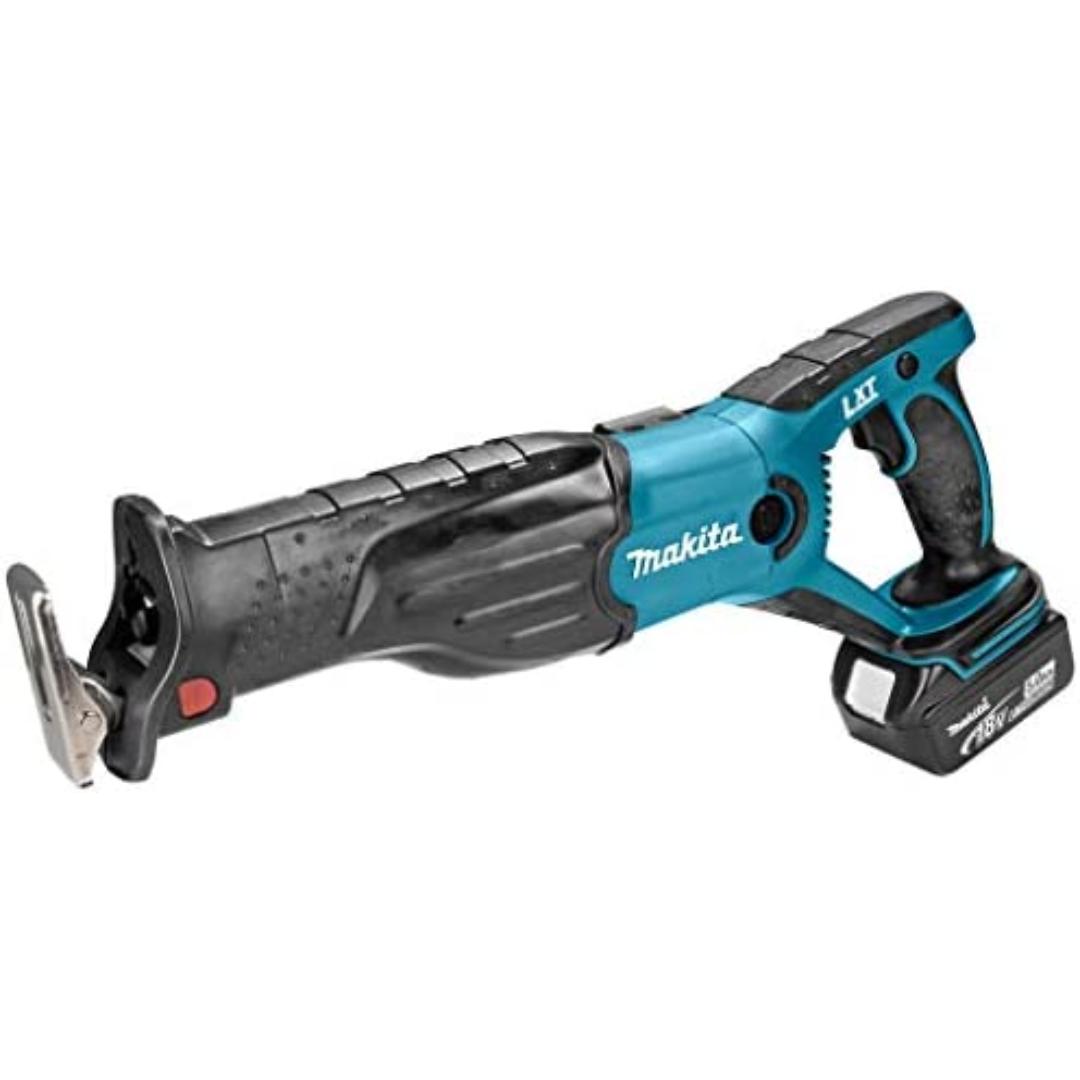
A reciprocating saw is a type of machine-powered saw in which the cutting action is achieved through a push-and-pull ("reciprocating") motion of the blade.The term is commonly applied to a type of saw used in construction and demolition work.
This type of saw, also known as a hognose or recip saw, has a large blade resembling that of a jigsaw and a handle oriented to allow the saw to be used comfortably on vertical surfaces. The typical design of this saw has a foot at the base of the blade, similar to that of a jigsaw.
The user holds or rests this foot on the surface being cut so that the tendency of the blade to push away from or pull towards the cut as the blade travels through its movement can be countered.
Easy handling by redesigned blade clamp.
Ergonomically designed handle for better operation in every application.
Two-light type LED job light with afterglow function.
Brushless motor.
Tool-less blade change.
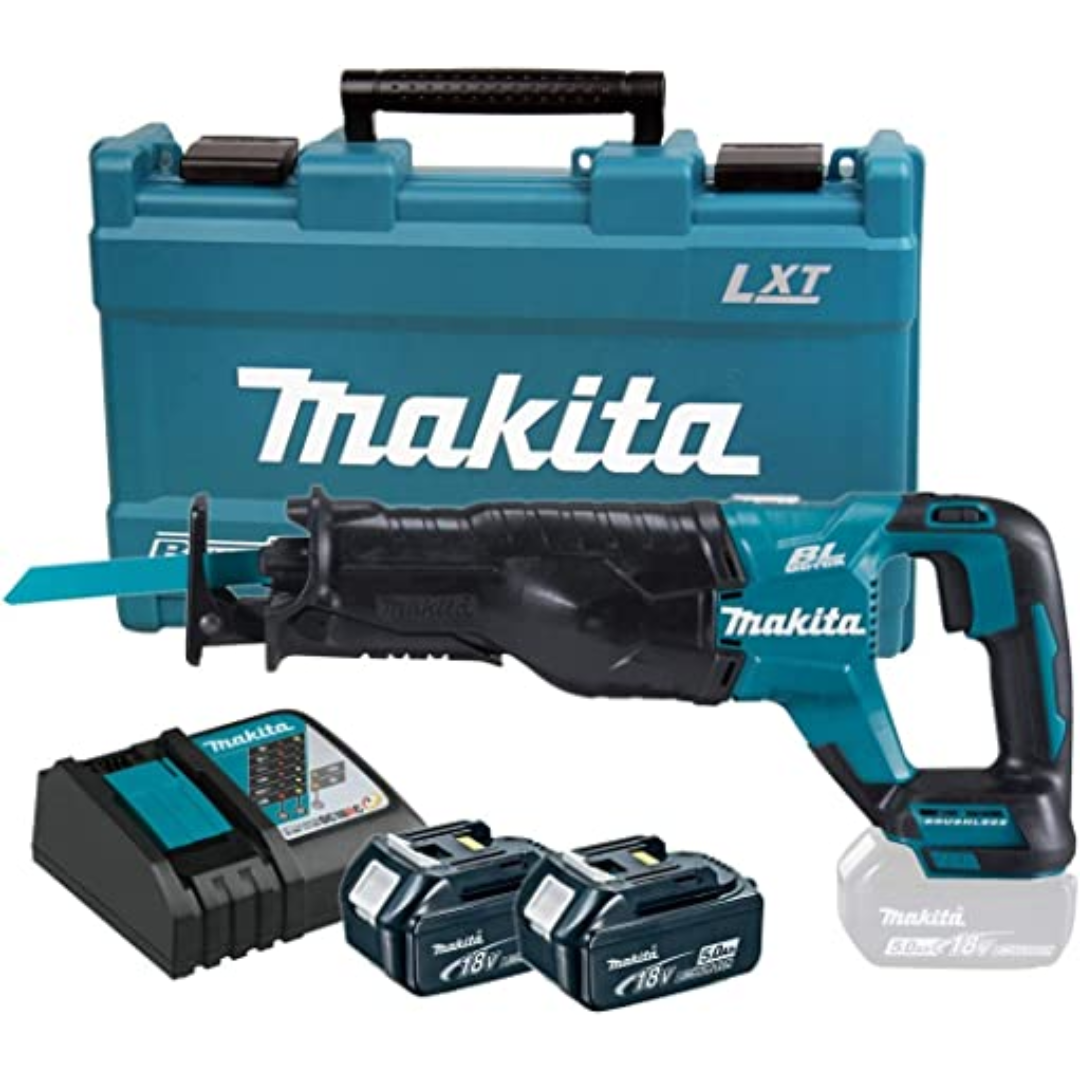
Comes WITHOUT BATTERY & CHARGER.
Lock-off lever.
Electric brake.
Variable speed control by trigger.
LED job light.
High power.
Retractable joist hook.
Tool-less shoe adjustment.
Ergonomically designed handle.
Compact & Lightweight.
Newly designed vertical crank mechanism.
Minimizes blade deflection from aiming point especially in metal cutting.
Reduces vibration of horizontal direction.
Electric 2 speed for wood / metal cutting.
A reciprocating saw is a type of machine-powered saw in which the cutting action is achieved through a push-and-pull ("reciprocating") motion of the blade.The term is commonly applied to a type of saw used in construction and demolition work.
This type of saw, also known as a hognose or recip saw, has a large blade resembling that of a jigsaw and a handle oriented to allow the saw to be used comfortably on vertical surfaces. The typical design of this saw has a foot at the base of the blade, similar to that of a jigsaw.
The user holds or rests this foot on the surface being cut so that the tendency of the blade to push away from or pull towards the cut as the blade travels through its movement can be countered.