We’ve upgraded Alisouq for a faster, smoother experience
loading...
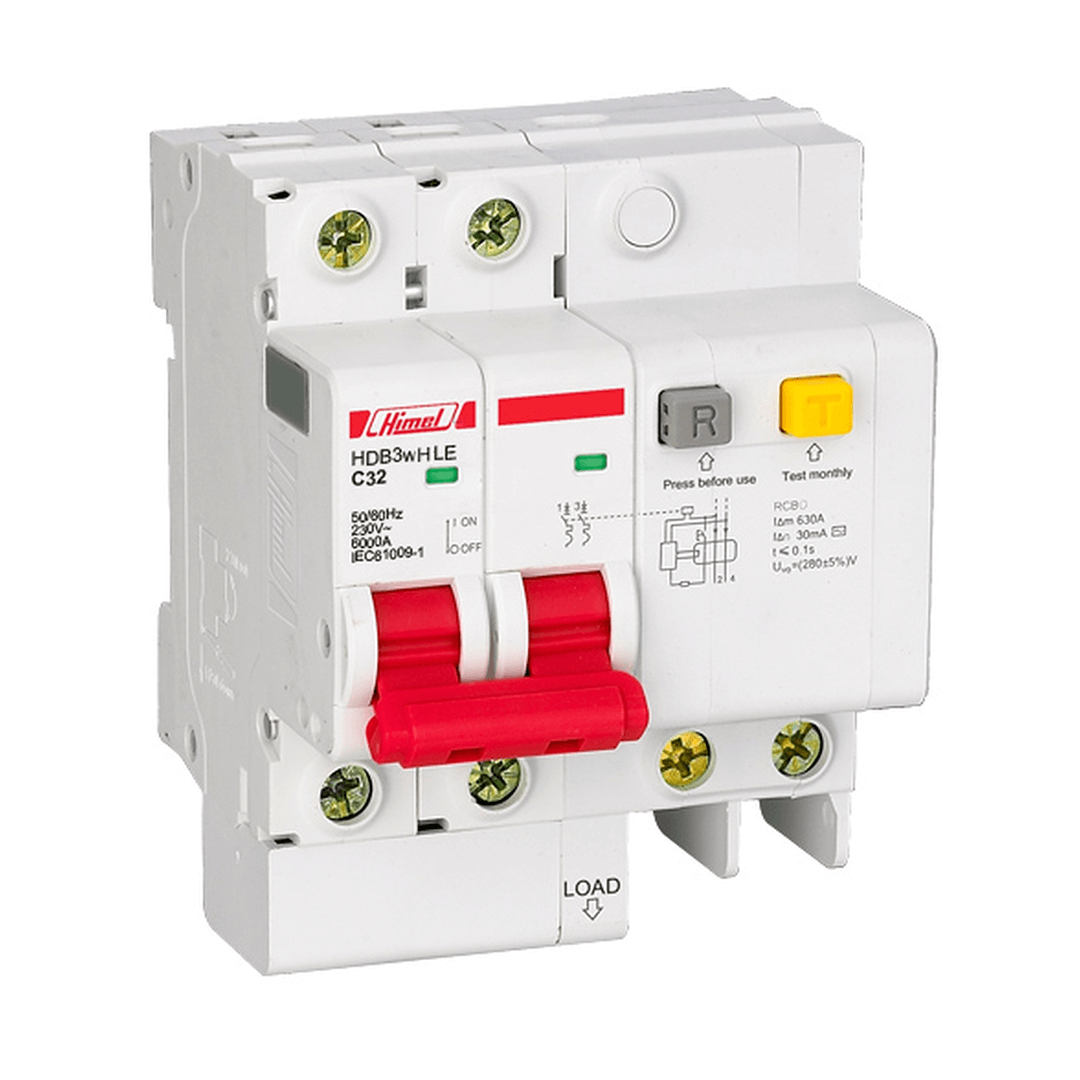
The RCBO HDB3wHLE 2P C50A 30mA, manufactured by Himel, is a reliable two-pole circuit breaker with integrated overcurrent and residual current protection. This RCBO is designed to ensure the safety and efficiency of electrical installations in various applications. It provides protection against overcurrents and detects and disconnects the circuit in the presence of residual currents, reducing the risk of electrical hazards.
Two-pole configuration
Rated current: 50A
Residual Current: 30mA
Suitable for 230V AC supply
Compact and space-saving design
Enhanced Safety: The RCBO HDB3wHLE 2P C50A 30mA offers comprehensive protection against both overcurrent and residual current faults, ensuring the safety of electrical circuits and minimizing the risk of electrical shocks and fires.
Dual-Pole Protection: With its two-pole design, this RCBO provides protection for both the live and neutral conductors, making it suitable for applications where two-pole protection is required.
Sensitivity to Residual Currents: The RCBO is designed to detect even small residual currents as low as 30mA, allowing for prompt disconnection of the circuit in the presence of potential electrical faults.
Robust Performance: This RCBO is built to withstand varying electrical conditions and provide reliable performance, ensuring continuous protection and smooth operation of electrical systems.
Easy Installation: The RCBO is designed for easy installation, featuring clear markings and user-friendly features that simplify the integration process and save time.
The RCBO HDB3wHLE 2P C50A 30mA, manufactured by Himel, is a reliable two-pole circuit breaker with integrated overcurrent and residual current protection. This RCBO is designed to ensure the safety and efficiency of electrical installations in various applications. It provides protection against overcurrents and detects and disconnects the circuit in the presence of residual currents, reducing the risk of electrical hazards.