1–3 business days (Dubai) | 3–5 business days (Other Emirates)
Returns:
14-day returns (conditions apply)
Product Overview
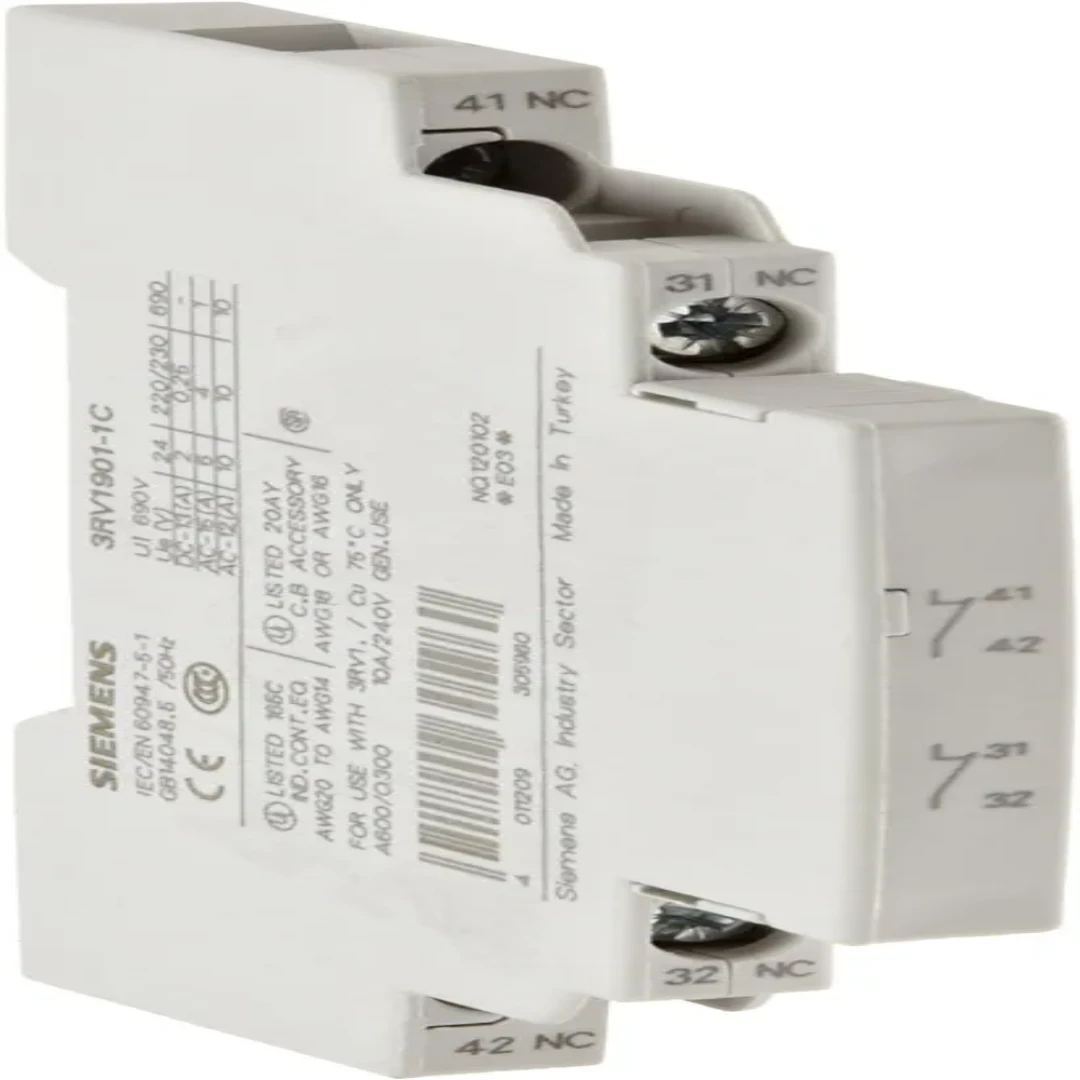
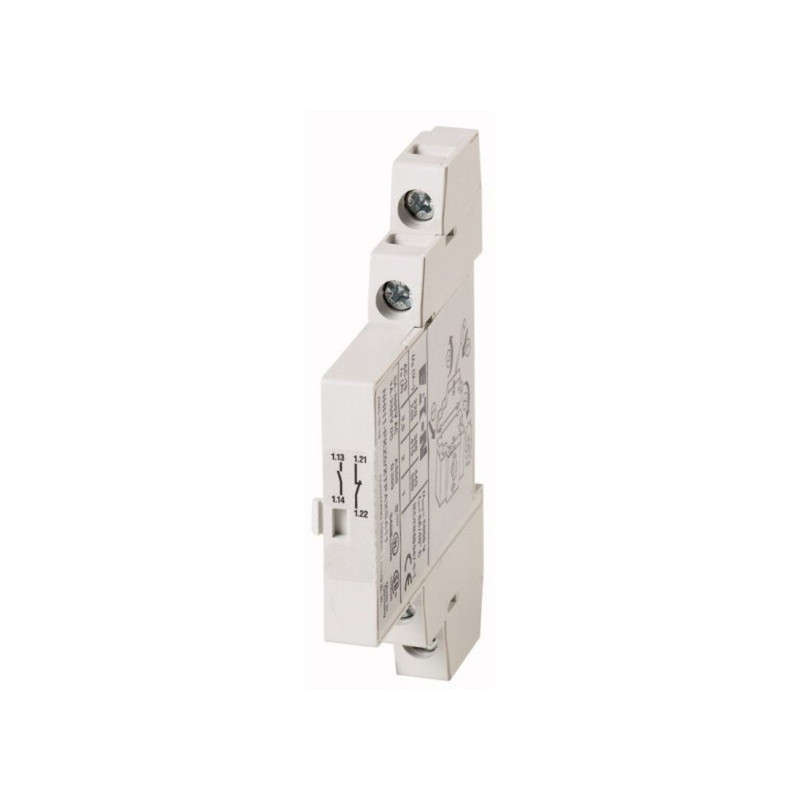
The EATON standard Auxiliary Contact Module with screw connection is an electrical component used in control panels, switchgear, and industrial automation systems. It is designed to provide additional contact points that can be used for monitoring, signaling, or controlling auxiliary circuits in conjunction with a main switching device, such as a circuit breaker or contactor. The module typically consists of a compact housing made of insulating material, which encloses the electrical contacts and connection terminals. The screw connection refers to the method of connecting the module to the main device or other components using screws. The module is usually mounted onto a DIN rail or directly onto a panel using screws or other suitable fasteners. Inside the module, there are one or more sets of contacts, which can be either normally open (NO) or normally closed (NC). These contacts are actuated based on the status of the main switching device. When the main device is activated or switched on, the auxiliary contacts change their state accordingly. The screw connection terminals are used to establish electrical connections between the auxiliary contact module and external devices or circuits. They typically consist of metal screw terminals or screw clamps that securely hold the conductors in place. The connection terminals are labeled for easy identification and typically include designations such as "A1," "A2," "B1," "B2," etc., which correspond to the auxiliary contact's specific function or circuit.
The standard auxiliary contact module with screw connection is designed for easy installation, maintenance, and replacement. It allows for flexibility in wiring configurations and provides reliable electrical connections. These modules are commonly used in a wide range of applications, including motor control systems, power distribution panels, and automation equipment, to enhance the functionality and monitoring capabilities of the main switching devices.
Features
Depth: The Auxiliary contact module has 68 mm depth.
Length: The Auxiliary contact module has 90 mm length.
Width: The Auxiliary contact module has 15 mm width.
Weight: The Auxiliary contact module weighs 0.033 kilogram.
Current Rating: The Auxiliary contact module has 1 A current rating.
Termination: The Auxiliary contact module has Screw connection termination.
Benefits
Enhanced Control and Monitoring: The auxiliary contacts provide additional contact points that enable control and monitoring of auxiliary circuits. They allow for the integration of signaling devices, indicator lights, alarms, or other auxiliary components to enhance the overall functionality and safety of the system.
Flexibility in Circuit Configuration: The module's screw connection terminals provide flexibility in wiring configurations. They allow for easy connection and disconnection of conductors, enabling convenient modifications or additions to the control circuitry without major rewiring.
Easy Installation and Maintenance: The compact and standardized design of the module simplifies installation onto DIN rails or panels. The screw connection terminals make it straightforward to establish secure electrical connections. Additionally, when maintenance or replacement is required, the module can be easily removed and replaced without disrupting the entire system.
Reliable Electrical Connections: The screw connections ensure secure and stable electrical connections. They provide a firm grip on the conductors, reducing the risk of loose connections, voltage drops, or intermittent faults. This promotes system reliability and minimizes the chances of unexpected failures or malfunctions.
Compatibility and Interchangeability: Standard auxiliary contact modules with screw connections are designed to be compatible with a wide range of main switching devices, such as circuit breakers and contactors. This allows for interchangeability and ease of integration into different systems or equipment, providing versatility and adaptability in various applications.
Increased Safety: By monitoring and controlling auxiliary circuits, the module enhances safety in industrial environments. It allows for the implementation of interlocking mechanisms, emergency shutdowns, or fault detection systems, improving protection against electrical hazards and preventing potential accidents or damages.
Cost-Effective Solution: The use of auxiliary contact modules with screw connections offers a cost-effective solution compared to custom-built or specialized control components. They provide a standardized and readily available option for adding auxiliary contacts, reducing the need for complex wiring configurations or bespoke control panels.
Technical Specifications
The EATON standard Auxiliary Contact Module with screw connection is an electrical component used in control panels, switchgear, and industrial automation systems. It is designed to provide additional contact points that can be used for monitoring, signaling, or controlling auxiliary circuits in conjunction with a main switching device, such as a circuit breaker or contactor. The module typically consists of a compact housing made of insulating material, which encloses the electrical contacts and connection terminals. The screw connection refers to the method of connecting the module to the main device or other components using screws. The module is usually mounted onto a DIN rail or directly onto a panel using screws or other suitable fasteners. Inside the module, there are one or more sets of contacts, which can be either normally open (NO) or normally closed (NC). These contacts are actuated based on the status of the main switching device. When the main device is activated or switched on, the auxiliary contacts change their state accordingly. The screw connection terminals are used to establish electrical connections between the auxiliary contact module and external devices or circuits. They typically consist of metal screw terminals or screw clamps that securely hold the conductors in place. The connection terminals are labeled for easy identification and typically include designations such as "A1," "A2," "B1," "B2," etc., which correspond to the auxiliary contact's specific function or circuit.
The standard auxiliary contact module with screw connection is designed for easy installation, maintenance, and replacement. It allows for flexibility in wiring configurations and provides reliable electrical connections. These modules are commonly used in a wide range of applications, including motor control systems, power distribution panels, and automation equipment, to enhance the functionality and monitoring capabilities of the main switching devices.