We’ve upgraded Alisouq for a faster, smoother experience
(incl. VAT)
loading...
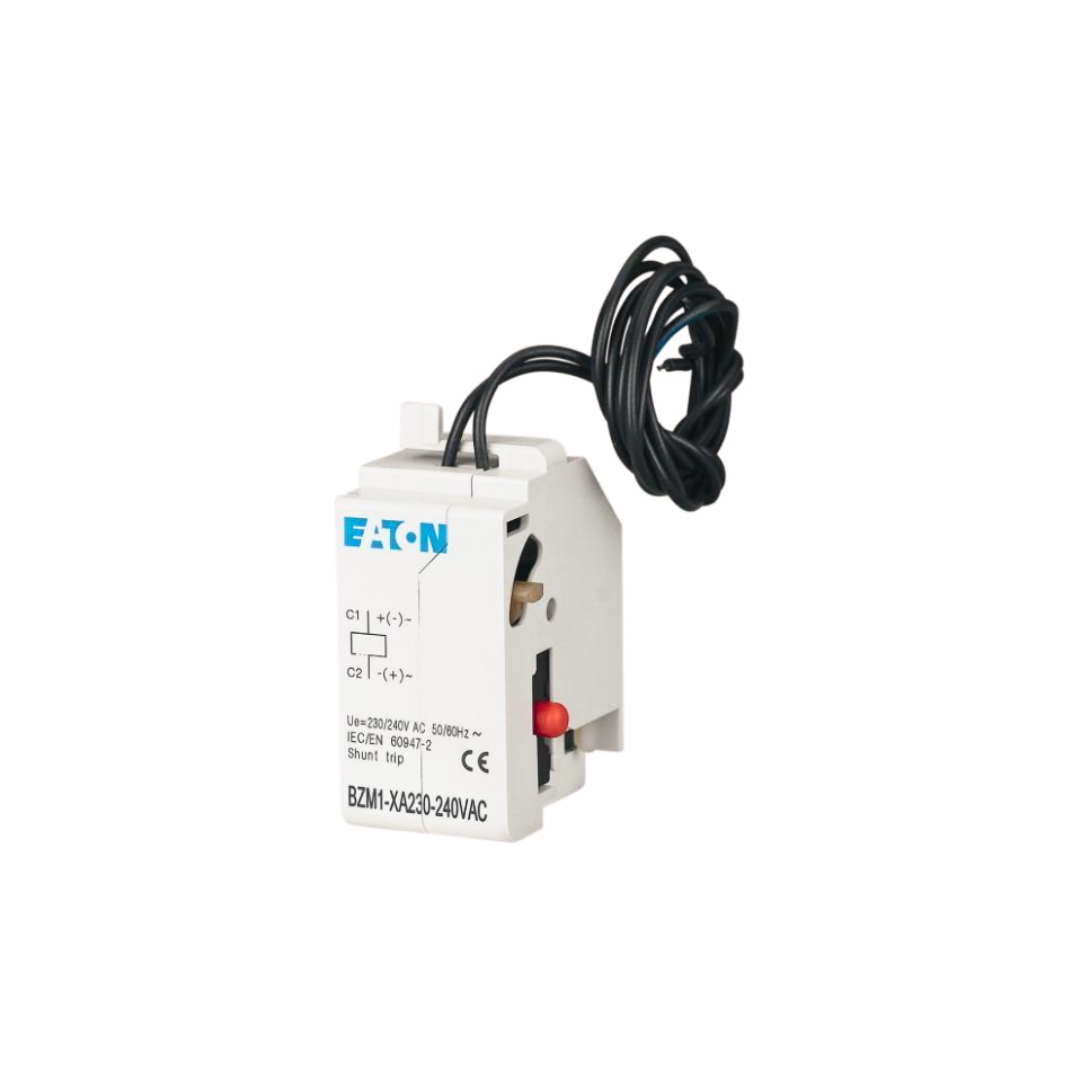
The EATON Shunt Release is an electrical device used in circuit breakers and other protective devices to remotely trip or release the contacts of the device. It serves as an additional safety feature that allows for the automatic or manual tripping of the circuit breaker from a remote location or control center. In the context of circuit breakers, a shunt release typically operates by generating a magnetic field when a certain condition is met, such as overcurrent or a fault. This magnetic field is used to mechanically trip the circuit breaker's contacts, effectively interrupting the current flow and isolating the faulty portion of the circuit. Shunt releases are often used in combination with other protection mechanisms, such as thermal or magnetic trip units, to provide comprehensive circuit protection. Shunt releases are commonly used in industrial applications, power distribution systems, and other scenarios where rapid disconnection of electrical circuits is essential to prevent damage to equipment, ensure personnel safety, and maintain the reliability of the electrical network.
Length: The Shunt Release has 3.5 inch length.
Width: The Shunt Release has 1.5 inch width.
Height: The Shunt Release has 2.9 inch height.
Weight: The Shunt Release weighs 70 gram.
Remote Control and Automation: Shunt releases allow for the remote tripping or opening of circuit breakers, which can be particularly useful in situations where manual intervention might be difficult or dangerous. They enable operators to disconnect faulty circuits or isolate sections of a network without needing to be physically present at the breaker location.
Enhanced Safety: Shunt releases contribute to increased safety by enabling the quick disconnection of faulty or overloaded circuits from a safe distance. This helps prevent potential hazards such as electrical fires, equipment damage, or personal injury.
Faster Response to Faults: When a fault occurs, a shunt release can trigger the circuit breaker to trip almost instantly, minimizing the time that faulty currents flow through the system. This rapid response helps reduce the likelihood of damage to equipment and mitigates potential cascading failures in the electrical network.
Selective Tripping: Shunt releases can be configured to trip specific circuit breakers or sections of the network while leaving unaffected circuits operational. This selectivity ensures that only the faulty portion is disconnected, minimizing downtime and maintaining the functionality of critical equipment.
Improved Maintenance: During maintenance or repairs, shunt releases can be used to remotely disconnect circuits, eliminating the need to physically access the breaker location. This simplifies maintenance procedures and reduces downtime for maintenance activities.
Integration with Control Systems: Shunt releases can be integrated into broader control and automation systems, allowing for coordination with other processes or triggering mechanisms. This integration enhances the overall efficiency and reliability of the electrical system.
Reduced Wear and Tear: Manual operation of circuit breakers can lead to wear and tear over time. Shunt releases eliminate the need for frequent manual operation, extending the lifespan of the circuit breaker and reducing maintenance requirements.
Flexibility and Adaptability: Shunt releases can be set to different sensitivity levels or trip thresholds, providing flexibility to adjust the protection settings based on the specific requirements of the electrical system.
Compliance with Standards: In many industrial applications, safety regulations and standards require the use of remote tripping mechanisms. Shunt releases help meet these compliance requirements by offering a reliable and effective method for remote disconnection.
The EATON Shunt Release is an electrical device used in circuit breakers and other protective devices to remotely trip or release the contacts of the device. It serves as an additional safety feature that allows for the automatic or manual tripping of the circuit breaker from a remote location or control center. In the context of circuit breakers, a shunt release typically operates by generating a magnetic field when a certain condition is met, such as overcurrent or a fault. This magnetic field is used to mechanically trip the circuit breaker's contacts, effectively interrupting the current flow and isolating the faulty portion of the circuit. Shunt releases are often used in combination with other protection mechanisms, such as thermal or magnetic trip units, to provide comprehensive circuit protection. Shunt releases are commonly used in industrial applications, power distribution systems, and other scenarios where rapid disconnection of electrical circuits is essential to prevent damage to equipment, ensure personnel safety, and maintain the reliability of the electrical network.