We’ve upgraded Alisouq for a faster, smoother experience
(incl. VAT)
loading...
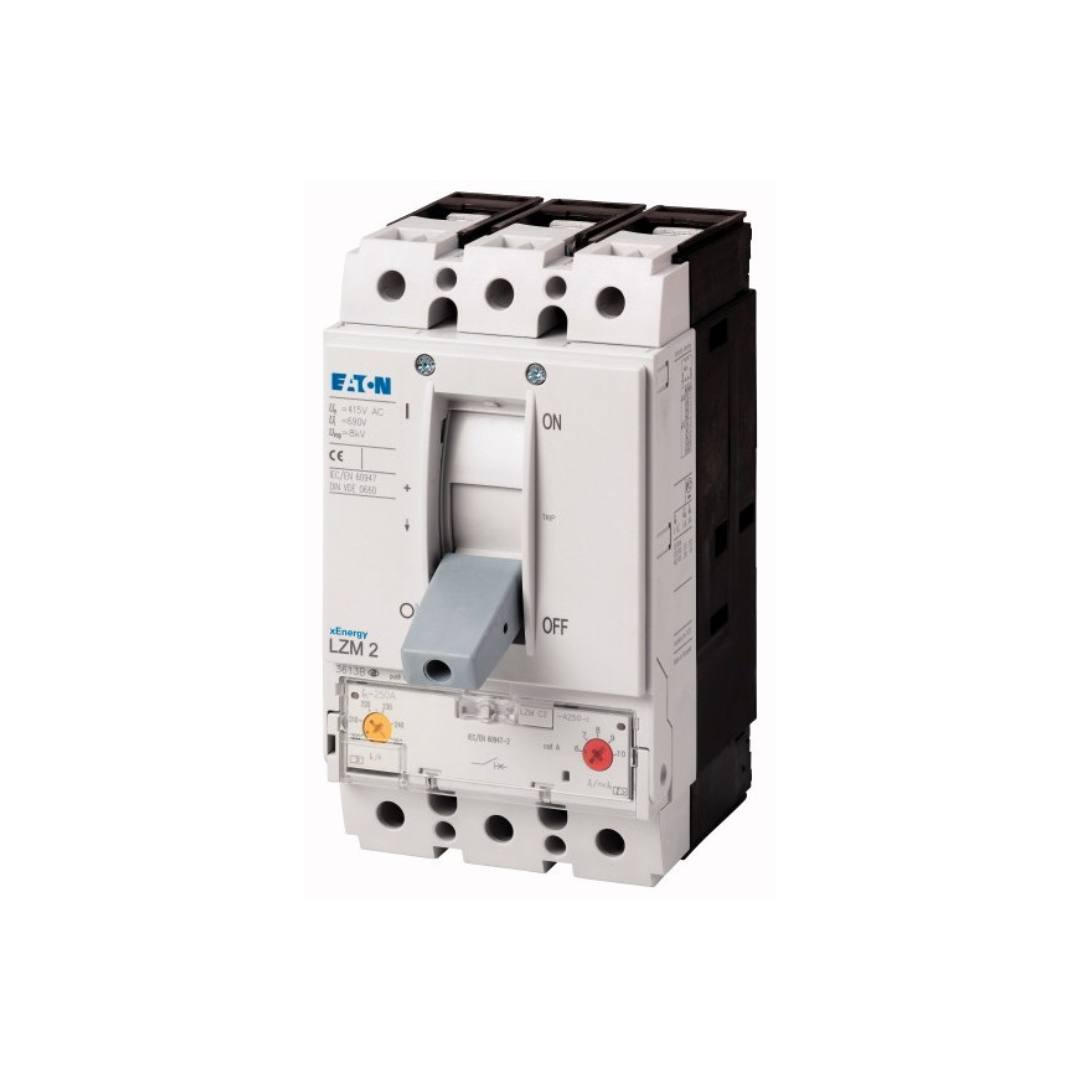
The EATON LZMC2-A200-I Y7-111939 MCCB is a Molded Case Circuit Breaker (MCCB) manufactured by Eaton Corporation. MCCBs are electrical devices designed to protect electrical circuits from overcurrents, short circuits, and other electrical faults. Here is a description of the EATON LZMC2-A200-I MCCB:The EATON LZMC2-A200-I Y7-111939 MCCB is a three-pole circuit breaker with a current rating of 200A. It is specifically designed for applications that require high current handling and robust circuit protection. The MCCB is built to interrupt fault currents up to 36 kiloamperes (36KA), making it suitable for demanding environments such as commercial buildings, industrial facilities, and power distribution systems.
The MCCB has three poles, allowing it to provide simultaneous protection for all three phases of the electrical system. This ensures comprehensive circuit protection across all phases.With a 36KA interrupting capacity, the MCCB can safely interrupt fault currents up to the specified level. This feature prevents damage to downstream equipment and reduces the risk of electrical hazards during fault conditions.
High interrupting capacity (36 kA): This MCCB can safely interrupt short-circuit currents up to 36 kA, making it suitable for use in high-demand applications.
Thermomagnetic release: This MCCB features a combination of thermal and magnetic releases, which provides both overload and short-circuit protection.
Overload protection: The thermal release of this MCCB can be adjusted to protect against overload currents up to 200 A.
Short-circuit protection: The magnetic release of this MCCB can be adjusted to protect against short-circuit currents up to 36 kA.
Compact size: This MCCB is a compact, lightweight unit that is easy to install and maintain.
Reliable performance: This MCCB has been designed and tested to meet the highest standards of reliability and performance.
Reliable circuit protection: The MCCB offers reliable protection against overcurrents and short circuits, safeguarding electrical circuits and equipment from damage and potential hazards.
Enhanced safety: By interrupting fault currents up to 36KA, the MCCB ensures the safety of personnel working with or around the electrical system. It helps prevent electrical fires and reduces the risk of electrical accidents.
High current handling: With a current rating of 200A, the MCCB is capable of handling higher current loads, making it suitable for applications that require substantial power consumption.
Comprehensive three-phase protection: The three-pole design of the MCCB provides simultaneous protection for all three phases of the electrical system. This ensures comprehensive circuit protection and balanced operation across all phases.
Frame Size 2 capability: Being a Frame Size 2 MCCB, it offers increased breaking capacities and higher current ratings compared to smaller frame sizes. This makes it suitable for applications with demanding power requirements.
The EATON LZMC2-A200-I Y7-111939 MCCB is a Molded Case Circuit Breaker (MCCB) manufactured by Eaton Corporation. MCCBs are electrical devices designed to protect electrical circuits from overcurrents, short circuits, and other electrical faults. Here is a description of the EATON LZMC2-A200-I MCCB:The EATON LZMC2-A200-I Y7-111939 MCCB is a three-pole circuit breaker with a current rating of 200A. It is specifically designed for applications that require high current handling and robust circuit protection. The MCCB is built to interrupt fault currents up to 36 kiloamperes (36KA), making it suitable for demanding environments such as commercial buildings, industrial facilities, and power distribution systems.
The MCCB has three poles, allowing it to provide simultaneous protection for all three phases of the electrical system. This ensures comprehensive circuit protection across all phases.With a 36KA interrupting capacity, the MCCB can safely interrupt fault currents up to the specified level. This feature prevents damage to downstream equipment and reduces the risk of electrical hazards during fault conditions.