We’ve upgraded Alisouq for a faster, smoother experience
SKU: NHI-E-11-PKZ0
(incl. VAT)
loading...
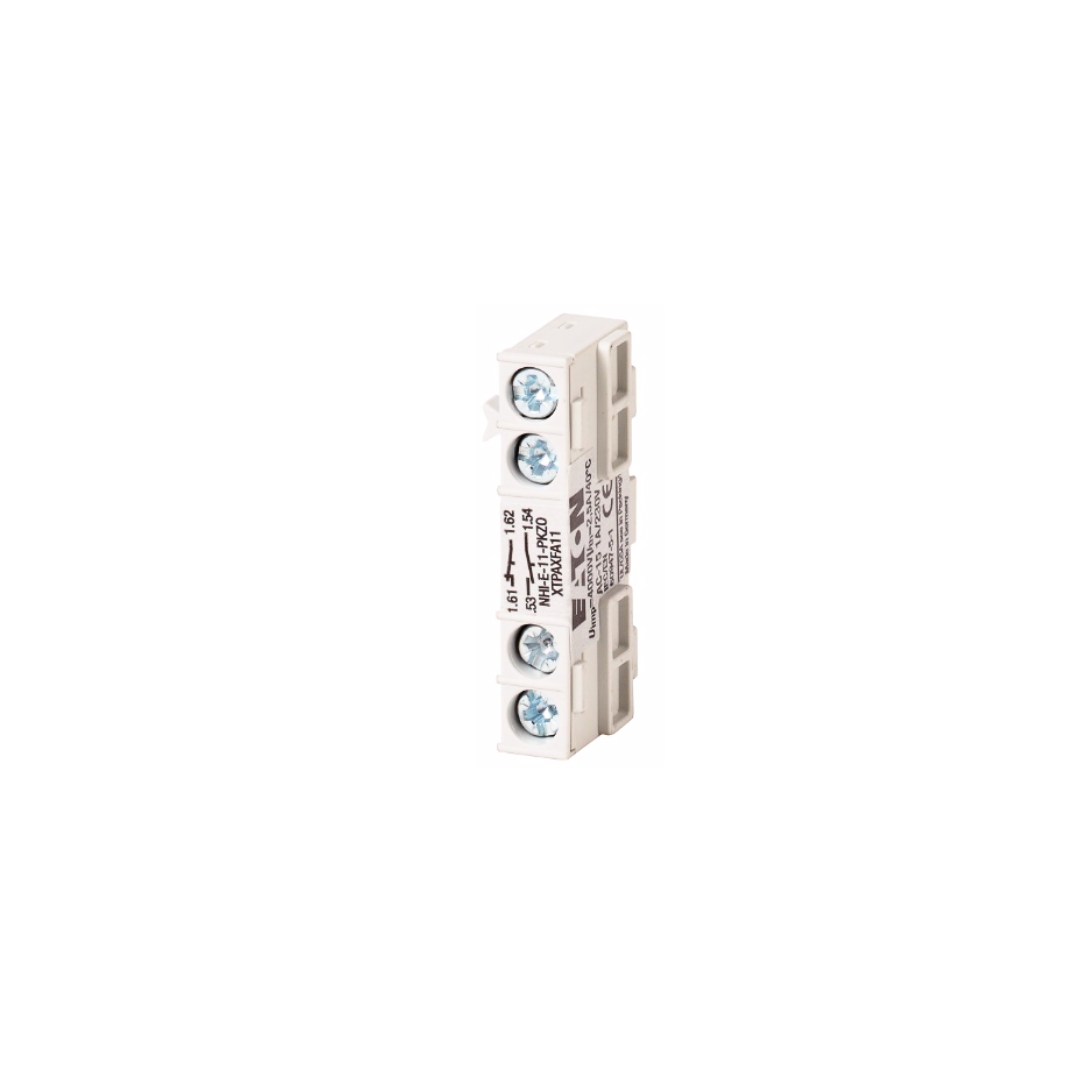
The EATON Auxiliary Contact Module is a device used in electrical systems to provide additional contact options for controlling or monitoring the operation of a circuit or device. It is designed for flush mounting and features a screw connection for easy installation and secure electrical connections. The module is specifically designed for flush mounting, which means it can be installed within a recessed or flush-mounted electrical enclosure or panel. It typically has mounting holes or slots on its body for attaching it securely to the desired location. The module has terminals or contact points where electrical wires can be connected using screws. These screw terminals provide a reliable and robust connection, ensuring good electrical conductivity and minimizing the risk of accidental disconnection. To connect the auxiliary contact module to the electrical system, you would typically strip the insulation from the end of the wires, insert the stripped portion into the designated terminal, and tighten the screw using a suitable screwdriver. This action secures the wire in place and establishes the electrical connection.
Depth: The Auxiliary contact module has 12 mm depth.
Length: The Auxiliary contact module has 35 mm length.
Width: The Auxiliary contact module has 45 mm width.
Weight: The Auxiliary contact module weighs 0.016 kilogram.
Current Rating: The Auxiliary contact module has 1 A current rating.
Termination: The Auxiliary contact module has Screw connection termination.
Enhanced Control: The auxiliary contact module provides additional contact options, allowing for more precise control and monitoring of electrical circuits or devices. This can be beneficial in applications where specific actions or conditions need to be detected or controlled.
Versatility: With four poles, the module can accommodate connections for multiple circuits or devices simultaneously. This versatility enables the integration of various components into a single module, reducing wiring complexity and optimizing space utilization.
Secure Connections: The screw connections provide a reliable and secure electrical connection. The use of screws ensures that the wires remain firmly attached, reducing the risk of accidental disconnection due to vibrations or other factors. This reliability is crucial in maintaining consistent and uninterrupted electrical operation.
Easy Installation: The surface mounting design simplifies the installation process. The module can be conveniently mounted on a flat surface using screws, making it suitable for a range of applications and locations. The straightforward installation process saves time and effort.
Durability: Eaton is a reputable brand known for producing high-quality electrical components. The 4 Pole Auxiliary Contact Module is likely built to withstand harsh environments and maintain reliable performance over an extended period. Its robust construction and secure connections contribute to its durability.
Compatibility: The module is designed to work seamlessly with Eaton's compatible devices and systems. This compatibility ensures smooth integration and compatibility with other Eaton components, facilitating a comprehensive and reliable electrical system.
The EATON Auxiliary Contact Module is a device used in electrical systems to provide additional contact options for controlling or monitoring the operation of a circuit or device. It is designed for flush mounting and features a screw connection for easy installation and secure electrical connections. The module is specifically designed for flush mounting, which means it can be installed within a recessed or flush-mounted electrical enclosure or panel. It typically has mounting holes or slots on its body for attaching it securely to the desired location. The module has terminals or contact points where electrical wires can be connected using screws. These screw terminals provide a reliable and robust connection, ensuring good electrical conductivity and minimizing the risk of accidental disconnection. To connect the auxiliary contact module to the electrical system, you would typically strip the insulation from the end of the wires, insert the stripped portion into the designated terminal, and tighten the screw using a suitable screwdriver. This action secures the wire in place and establishes the electrical connection.