1–3 business days (Dubai) | 3–5 business days (Other Emirates)
Returns:
14-day returns (conditions apply)
Product Overview
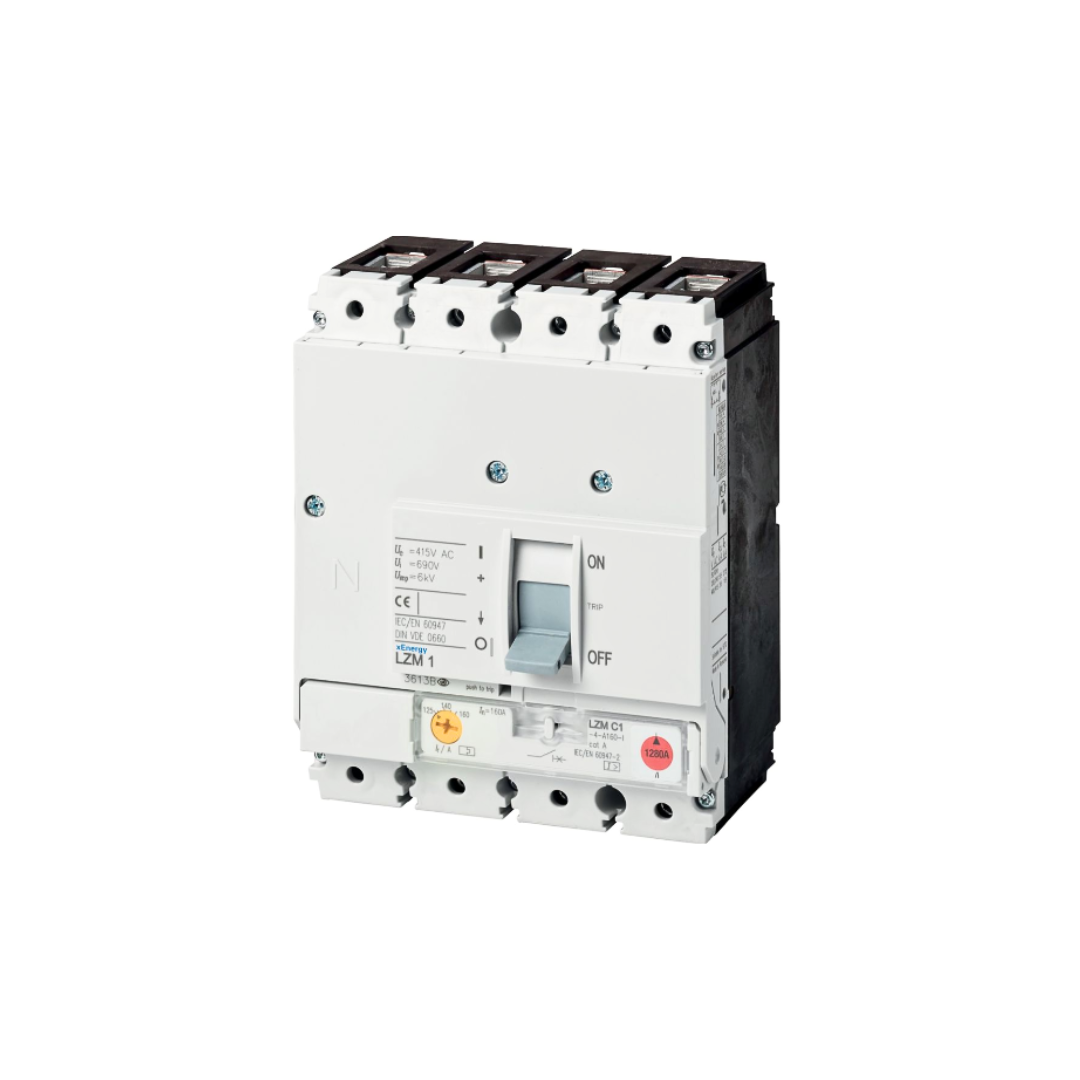
The EATON 4P circuit breaker refers to a four-pole circuit breaker. It is an electrical switching device designed to protect an electrical circuit from damage caused by overcurrents, short circuits, and other electrical faults. A 4P circuit breaker consists of four separate poles, each responsible for the protection of a specific phase in a three-phase electrical system. The four poles are typically labeled as "P1," "P2," "P3," and "P4" or "L1," "L2," "L3," and "N" (neutral). The additional fourth pole (neutral) provides protection against faults in the neutral conductor. The circuit breaker operates based on the principle of thermal and magnetic tripping. It monitors the current flowing through the circuit and trips (opens) when it detects an excessive current or a fault condition. This action disrupts the electrical flow, preventing damage to the circuit and connected devices. 4P circuit breakers can have different tripping characteristics, which determine how quickly they respond to overcurrents. Common tripping characteristics include B (general purpose), C (suitable for motor control and medium inductive loads), D (suitable for high inductive loads), and K (special applications). 4P circuit breakers are commonly used in industrial, commercial, and residential settings where a three-phase electrical system is present. They provide protection for large appliances, machinery, distribution boards, and other electrical installations.
Each pole of the 4P circuit breaker has its own connection points. The line conductors (phases) are typically connected to the respective poles, and the neutral conductor is connected to the fourth pole. Additionally, there are usually connection points for auxiliary circuits such as shunt trips or undervoltage releases. 4P circuit breakers have various ratings that indicate their capabilities. These ratings include voltage rating (the maximum voltage the breaker can safely handle), current rating (the maximum current the breaker can carry continuously), and short-circuit breaking capacity (the maximum fault current the breaker can safely interrupt). A 4P circuit breaker provides enhanced protection for three-phase electrical systems by monitoring the current flow in each phase and the neutral conductor. It offers reliability and safeguards against electrical faults, contributing to the safety and operational efficiency of electrical installations.
Features
Depth: The electric circuit breaker has 88 millimetre depth.
Height: The electric circuit breaker has 145 millimetre height.
Width: The electric circuit breaker has 120 millimetre width.
Weight: The electric circuit breaker weighs 1.324 kilogram.
Number of poles: The electric circuit breaker has four poles.
Amperage Rating: The electric circuit breaker has amperage rating of 125 A.
Benefits
Enhanced Protection: A 4P circuit breaker provides comprehensive protection for three-phase electrical systems. By monitoring each phase and the neutral conductor, it offers improved safety against overcurrents, short circuits, ground faults, and other electrical faults. This protection helps prevent damage to the electrical circuit and connected devices, reducing the risk of fires, equipment failures, and electrical hazards.
Fault Isolation: In the event of a fault or electrical problem, a 4P circuit breaker can isolate the affected circuit from the rest of the electrical system. This feature helps in identifying and resolving the fault without disrupting power to the entire system. It allows for easier troubleshooting and maintenance, minimizing downtime and ensuring the continuity of operations.
Flexibility: The four-pole design of the circuit breaker accommodates both the three-phase supply and the neutral conductor. This flexibility makes it suitable for a wide range of applications, including industrial machinery, commercial buildings, data centers, and residential installations. It can protect a variety of electrical loads, from motors and lighting systems to sensitive electronic equipment.
Reliable Operation: 4P circuit breakers are engineered to provide reliable operation even under demanding conditions. They are built to withstand high fault currents and offer a high breaking capacity, ensuring efficient interruption of fault currents without damaging the breaker itself. This reliability contributes to the overall stability and performance of the electrical system.
Safety Features: Modern 4P circuit breakers often come equipped with additional safety features such as arc fault detection, ground fault protection, and overtemperature protection. These features enhance the safety of the electrical installation by detecting and mitigating potential hazards, reducing the risk of electrical shocks, arc flashes, and electrical accidents.
Compliance with Standards: 4P circuit breakers are designed and manufactured to comply with relevant electrical standards and regulations. This ensures that they meet specific requirements for performance, safety, and reliability. Using compliant circuit breakers helps maintain a safe and code-compliant electrical installation.
Ease of Installation: Installing a 4P circuit breaker is relatively straightforward, especially when compared to installing individual single-pole breakers for each phase. The four-pole design simplifies the wiring process, reduces the number of components, and saves space in the electrical panel.
Technical Specifications
The EATON 4P circuit breaker refers to a four-pole circuit breaker. It is an electrical switching device designed to protect an electrical circuit from damage caused by overcurrents, short circuits, and other electrical faults. A 4P circuit breaker consists of four separate poles, each responsible for the protection of a specific phase in a three-phase electrical system. The four poles are typically labeled as "P1," "P2," "P3," and "P4" or "L1," "L2," "L3," and "N" (neutral). The additional fourth pole (neutral) provides protection against faults in the neutral conductor. The circuit breaker operates based on the principle of thermal and magnetic tripping. It monitors the current flowing through the circuit and trips (opens) when it detects an excessive current or a fault condition. This action disrupts the electrical flow, preventing damage to the circuit and connected devices. 4P circuit breakers can have different tripping characteristics, which determine how quickly they respond to overcurrents. Common tripping characteristics include B (general purpose), C (suitable for motor control and medium inductive loads), D (suitable for high inductive loads), and K (special applications). 4P circuit breakers are commonly used in industrial, commercial, and residential settings where a three-phase electrical system is present. They provide protection for large appliances, machinery, distribution boards, and other electrical installations.
Each pole of the 4P circuit breaker has its own connection points. The line conductors (phases) are typically connected to the respective poles, and the neutral conductor is connected to the fourth pole. Additionally, there are usually connection points for auxiliary circuits such as shunt trips or undervoltage releases. 4P circuit breakers have various ratings that indicate their capabilities. These ratings include voltage rating (the maximum voltage the breaker can safely handle), current rating (the maximum current the breaker can carry continuously), and short-circuit breaking capacity (the maximum fault current the breaker can safely interrupt). A 4P circuit breaker provides enhanced protection for three-phase electrical systems by monitoring the current flow in each phase and the neutral conductor. It offers reliability and safeguards against electrical faults, contributing to the safety and operational efficiency of electrical installations.