1–3 business days (Dubai) | 3–5 business days (Other Emirates)
Returns:
14-day returns (conditions apply)
Product Overview
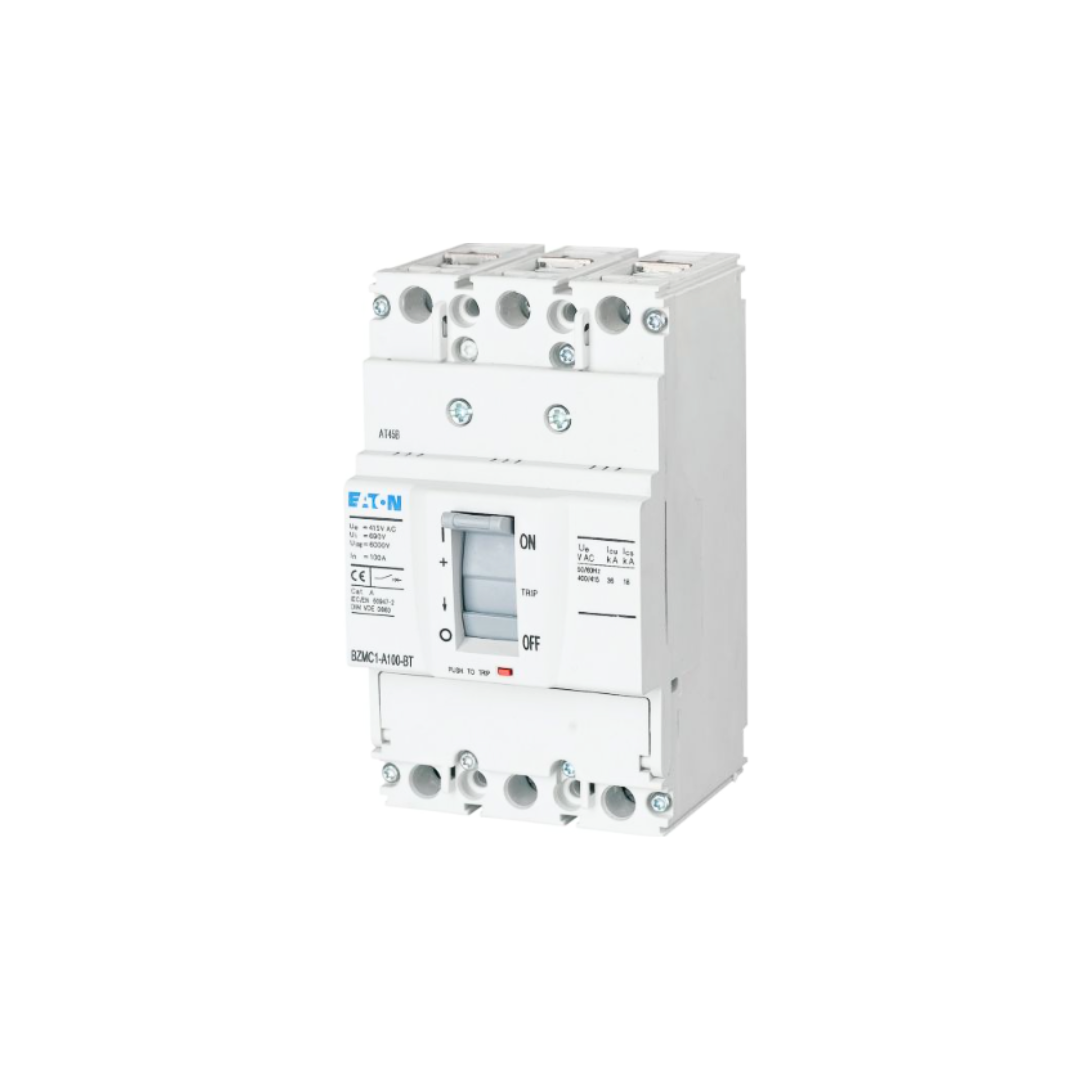
The EATON 3P circuit breaker refers to a three-pole circuit breaker, which is a protective device used in electrical distribution systems to automatically interrupt or disconnect the flow of electric current in the event of an overload, short circuit, or other electrical fault. The "3P" designation indicates that the circuit breaker has three separate poles or current paths, allowing it to control and protect three-phase electrical circuits. A 3P circuit breaker consists of three poles, each representing a current path for one phase of a three-phase system. These poles are electrically independent but mechanically linked, so when one pole trips, the other two also open simultaneously. The trip unit is the brain of the circuit breaker. It monitors the current flowing through each pole and detects abnormal conditions. It is responsible for initiating the trip mechanism when it detects an overcurrent, short circuit, or other fault. The trip unit can be thermal, magnetic, or a combination of both, depending on the specific circuit breaker design. The operating mechanism controls the opening and closing of the circuit breaker contacts. It can be manually operated or motorized, depending on the application. The mechanism ensures that the circuit breaker can quickly interrupt the current flow when a fault occurs.
3P circuit breakers are available in various current ratings to match the specific requirements of the electrical system. These ratings typically include the maximum current the circuit breaker can safely handle without tripping (called the continuous current rating) and the maximum fault current it can interrupt (called the short-circuit current rating). Additional accessories can be attached to the circuit breaker to enhance its functionality and provide additional protection. These may include auxiliary switches for remote monitoring, shunt trips for remote tripping, undervoltage releases for voltage-dependent tripping, and more. 3P circuit breakers can be mounted on a panel board, switchboard, or in a protective enclosure, depending on the specific installation requirements. They are designed to ensure secure and reliable operation in various environments. A 3P circuit breaker is a versatile protective device used in three-phase electrical systems to ensure the safety of the system and connected equipment by quickly disconnecting the power in the event of electrical faults.
Features
Length: 3P circuit breakers has 130.2 millimetrelength.
Height: 3P circuit breakers has 86 millimetre height.
Width: 3P circuit breakers has 75 millimetre width.
Weight: 3P circuit breakers weighs 0.83 kilogram.
Number of poles: 3P circuit breakers has Three poles.
Amperage Rating: 3P circuit breakers has 32 A amperage rating.
Benefits
Protection against Overload and Short Circuits: One of the primary benefits of 3P circuit breakers is their ability to protect electrical circuits and connected equipment from overcurrent conditions and short circuits. They can detect excessive current flow and quickly interrupt the circuit to prevent damage to wiring, motors, transformers, and other components.
Enhanced Safety: By promptly disconnecting the power supply in the event of a fault, 3P circuit breakers contribute to improved safety in electrical systems. They help prevent electrical fires, equipment damage, and potential hazards to personnel, reducing the risk of electrical accidents.
Reliable and Quick Operation: 3P circuit breakers are designed for fast and reliable operation. They have efficient trip units that respond quickly to abnormal conditions, ensuring rapid interruption of current flow. This swift response helps minimize the duration of fault currents, reducing potential damage and improving system reliability.
Selectivity and Coordination: Selectivity refers to the ability of circuit breakers to selectively trip only the faulty section of the electrical system while leaving the rest of the system operational. 3P circuit breakers can be coordinated with other protective devices in the system, such as fuses or other circuit breakers, to achieve proper selectivity. This allows for localized fault isolation and reduces downtime by minimizing the impact of faults on the entire electrical system.
Flexibility in Three-Phase Systems: 3P circuit breakers are specifically designed for three-phase electrical systems. They provide protection for all three phases simultaneously, ensuring balanced protection and allowing for efficient management of three-phase loads. This makes them suitable for a wide range of industrial, commercial, and residential applications.
Ease of Maintenance: 3P circuit breakers are generally designed for easy installation, inspection, and maintenance. They often feature modular designs that allow for quick replacement of components and easy access for testing and troubleshooting. This simplifies maintenance tasks and reduces downtime during servicing.
Wide Range of Ratings: 3P circuit breakers are available in various current ratings and sizes to suit different electrical system requirements. This flexibility allows for the selection of circuit breakers that precisely match the current-carrying capacity and fault current levels of the specific application.
Technical Specifications
The EATON 3P circuit breaker refers to a three-pole circuit breaker, which is a protective device used in electrical distribution systems to automatically interrupt or disconnect the flow of electric current in the event of an overload, short circuit, or other electrical fault. The "3P" designation indicates that the circuit breaker has three separate poles or current paths, allowing it to control and protect three-phase electrical circuits. A 3P circuit breaker consists of three poles, each representing a current path for one phase of a three-phase system. These poles are electrically independent but mechanically linked, so when one pole trips, the other two also open simultaneously. The trip unit is the brain of the circuit breaker. It monitors the current flowing through each pole and detects abnormal conditions. It is responsible for initiating the trip mechanism when it detects an overcurrent, short circuit, or other fault. The trip unit can be thermal, magnetic, or a combination of both, depending on the specific circuit breaker design. The operating mechanism controls the opening and closing of the circuit breaker contacts. It can be manually operated or motorized, depending on the application. The mechanism ensures that the circuit breaker can quickly interrupt the current flow when a fault occurs.
3P circuit breakers are available in various current ratings to match the specific requirements of the electrical system. These ratings typically include the maximum current the circuit breaker can safely handle without tripping (called the continuous current rating) and the maximum fault current it can interrupt (called the short-circuit current rating). Additional accessories can be attached to the circuit breaker to enhance its functionality and provide additional protection. These may include auxiliary switches for remote monitoring, shunt trips for remote tripping, undervoltage releases for voltage-dependent tripping, and more. 3P circuit breakers can be mounted on a panel board, switchboard, or in a protective enclosure, depending on the specific installation requirements. They are designed to ensure secure and reliable operation in various environments. A 3P circuit breaker is a versatile protective device used in three-phase electrical systems to ensure the safety of the system and connected equipment by quickly disconnecting the power in the event of electrical faults.