We’ve upgraded Alisouq for a faster, smoother experience
(incl. VAT)
loading...
Increase in assembly productivity When elements are joined using hexalobular (TX) fasteners, the force is transmitted over a large surface area across the flanks of the drive rather than being centred on one point, as is the case with hexagon socket drives, for example. This has a number of advantages: Reduced tool wear Tool does not slip because force is distributed optimally No damage to surface coating No wobbling Screw locates securely Hexalobular drives must comply with DIN EN ISO 10664 As a result, connection elements with hexalobular heads are standardised and can be used all over the world Notice Due to their head geometry, these screws can only be subjected to limited loads, see DIN EN ISO 898-1
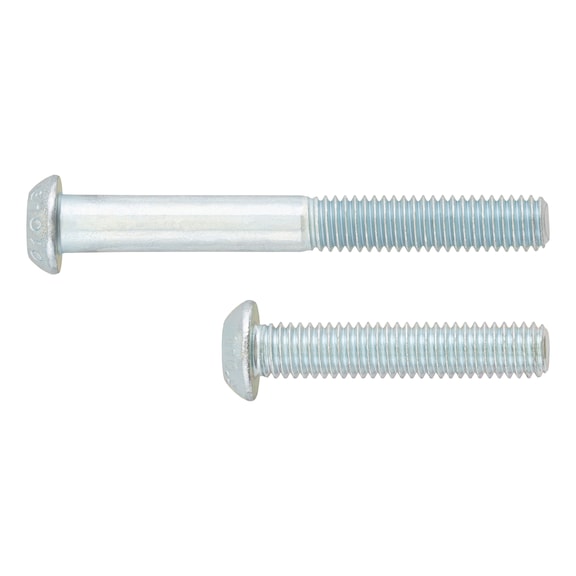
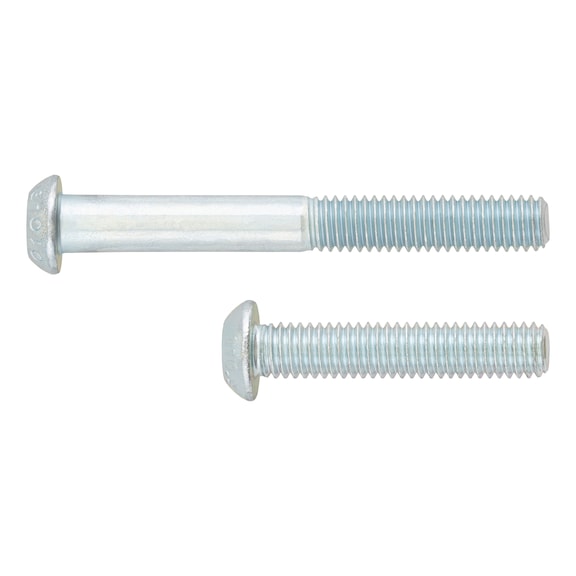
Hexalobular screw with flattened half round head DIN 34805-1, TX drive, blue passivated zinc plated 10.9 steel Thread type x nominal diameter: M10 Head diameter: 17.5 mm Head height: 5.5 mm Standards: DIN 34805-1 Material: Steel Property class: 010.9 Surface: Zinc plated Head type: Button head Drive type: Internal hexalobular Internal drive: TX50 Thread type: Metric thread Thread form: Standard metric thread Thread design: Full thread Product class: A RoHS-compliant: Yes show more ... show less ... See product details Show similar products
Increase in assembly productivity When elements are joined using hexalobular (TX) fasteners, the force is transmitted over a large surface area across the flanks of the drive rather than being centred on one point, as is the case with hexagon socket drives, for example. This has a number of advantages: Reduced tool wear Tool does not slip because force is distributed optimally No damage to surface coating No wobbling Screw locates securely Hexalobular drives must comply with DIN EN ISO 10664 As a result, connection elements with hexalobular heads are standardised and can be used all over the world Notice Due to their head geometry, these screws can only be subjected to limited loads, see DIN EN ISO 898-1