1–3 business days (Dubai) | 3–5 business days (Other Emirates)
Returns:
14-day returns (conditions apply)
Product Overview
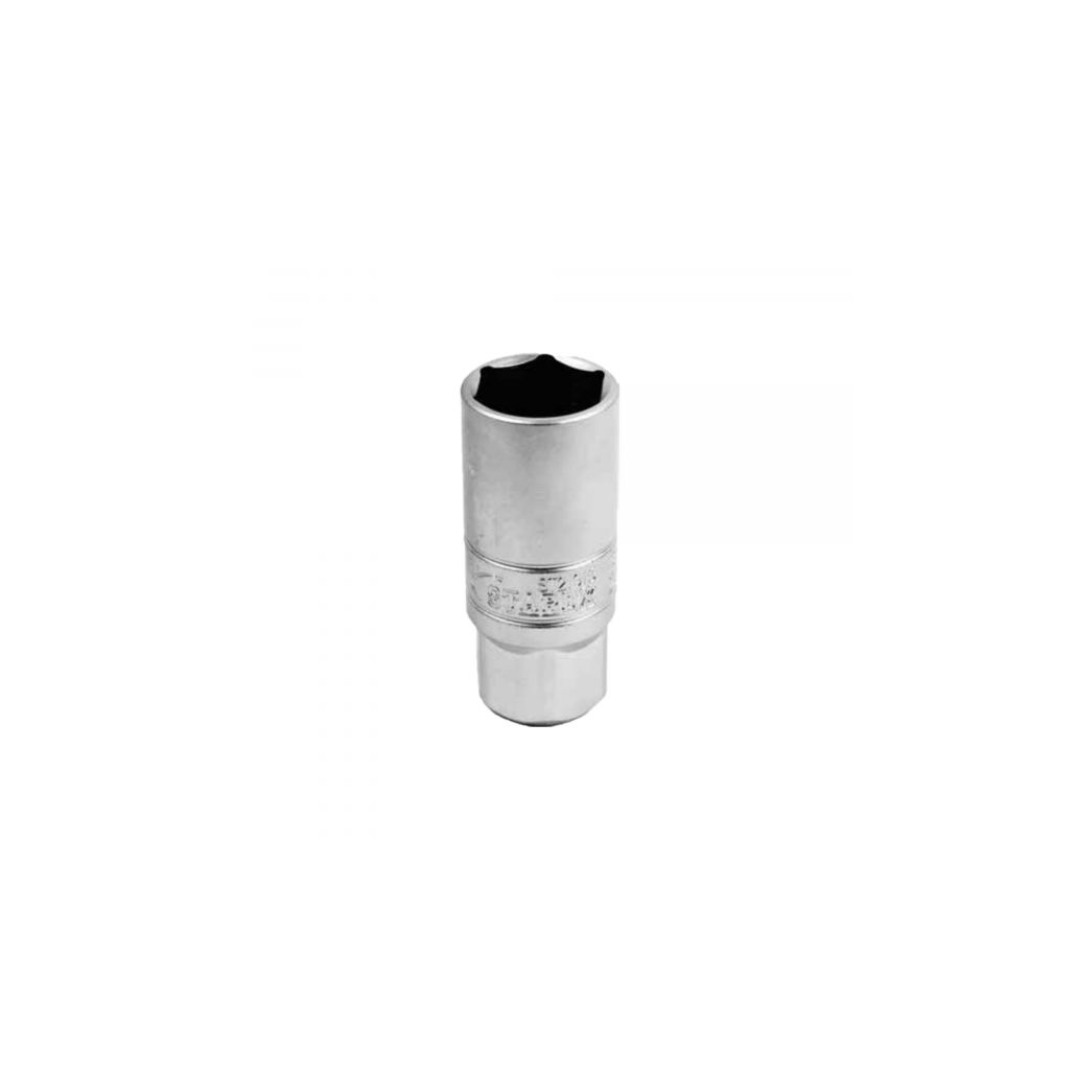
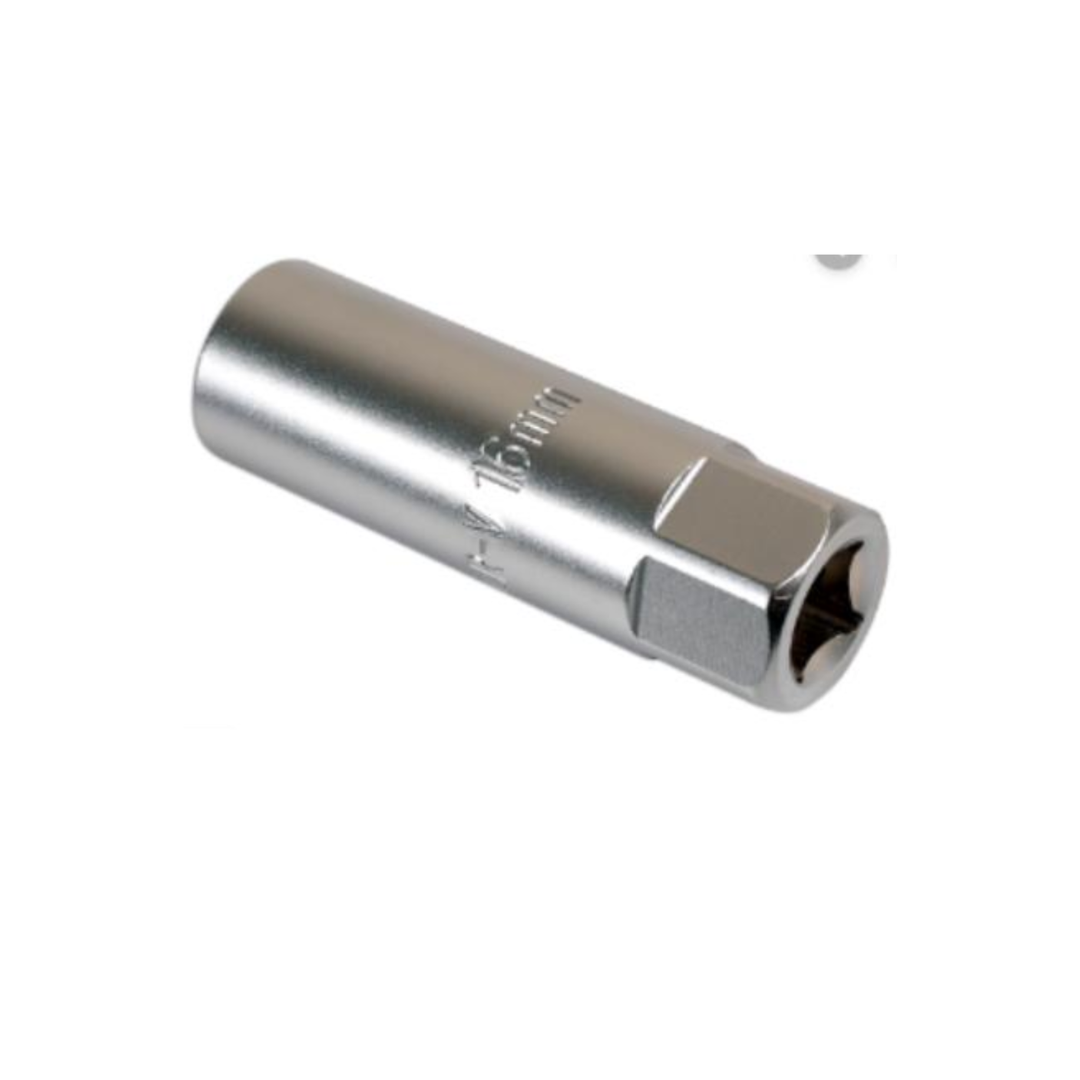
The basic contemporary form of socket is hexagonal, referred to as "6-point" for the pointed intersections where its six solid sided facets meet. These are attached to the driving tool via a male/female square connection fitting (called the square drive). Standard sizes of square drives around the world include 1⁄4, 3⁄8, 1⁄2, 3⁄4, 1, 1+1⁄2, 2+1⁄2 and 3+1⁄2 in (6.4, 9.5, 12.7, 19.1, 25.4, 38.1, 63.5 and 88.9 mm) square drive sizes along with some lesser used drivers such as 5/8 inch square drive, and both No. 4 and No. 5 spline drives specified in ANSI B107 specifications. This wide range of square drive sizes provides for a wide variety of socket types and sizes to suit small to very large nuts and bolts. Some square drivers have a through hole to attach the socket to the driver (using a retaining ring with O-ring and pin type, or single piece molded retaining rings), a locking pin, or friction ball. Some common hand ratchets employ a quick release button on their top for quick socket release of smaller sockets. The tool chosen to drive the socket wrench ultimately supplies the mechanical advantage needed by the user to provide the torque needed to loosen or tighten the fastener as may be required. Larger drivers are typically used with higher torque, while smaller drivers are used for convenience in smaller low torque applications. Given the limits of human strength and fatigue, torque above 800 N⋅m (600 lbf⋅ft) of torque will generally involve some kind of power assist, instead of the user simply pushing on the handle of a wrench. Very large sockets and drivers are typically powered by hydraulics to achieve torque.
Features
Hex Keys socket is made of chrome vanadium steel, with high torque for durable use.
Used with 90 Degree sliding T-Bar handle that is anti-slip and provides better grip.
Extra long arm can save strength and time for pleasant operation,can reach to long or narrow space.
Socket with sliding T-Bar handle is widely used in Engineering equipment repair, Car repair, Home repair.
Benefits
Professional tool for commercial or occasional use.
Comfortable grip and easy usage.
Export Quality.
Sockets manufactured from chrome vanadium steel hardened.
Technical Specifications
The basic contemporary form of socket is hexagonal, referred to as "6-point" for the pointed intersections where its six solid sided facets meet. These are attached to the driving tool via a male/female square connection fitting (called the square drive). Standard sizes of square drives around the world include 1⁄4, 3⁄8, 1⁄2, 3⁄4, 1, 1+1⁄2, 2+1⁄2 and 3+1⁄2 in (6.4, 9.5, 12.7, 19.1, 25.4, 38.1, 63.5 and 88.9 mm) square drive sizes along with some lesser used drivers such as 5/8 inch square drive, and both No. 4 and No. 5 spline drives specified in ANSI B107 specifications. This wide range of square drive sizes provides for a wide variety of socket types and sizes to suit small to very large nuts and bolts. Some square drivers have a through hole to attach the socket to the driver (using a retaining ring with O-ring and pin type, or single piece molded retaining rings), a locking pin, or friction ball. Some common hand ratchets employ a quick release button on their top for quick socket release of smaller sockets. The tool chosen to drive the socket wrench ultimately supplies the mechanical advantage needed by the user to provide the torque needed to loosen or tighten the fastener as may be required. Larger drivers are typically used with higher torque, while smaller drivers are used for convenience in smaller low torque applications. Given the limits of human strength and fatigue, torque above 800 N⋅m (600 lbf⋅ft) of torque will generally involve some kind of power assist, instead of the user simply pushing on the handle of a wrench. Very large sockets and drivers are typically powered by hydraulics to achieve torque.