We’ve upgraded Alisouq for a faster, smoother experience
loading...
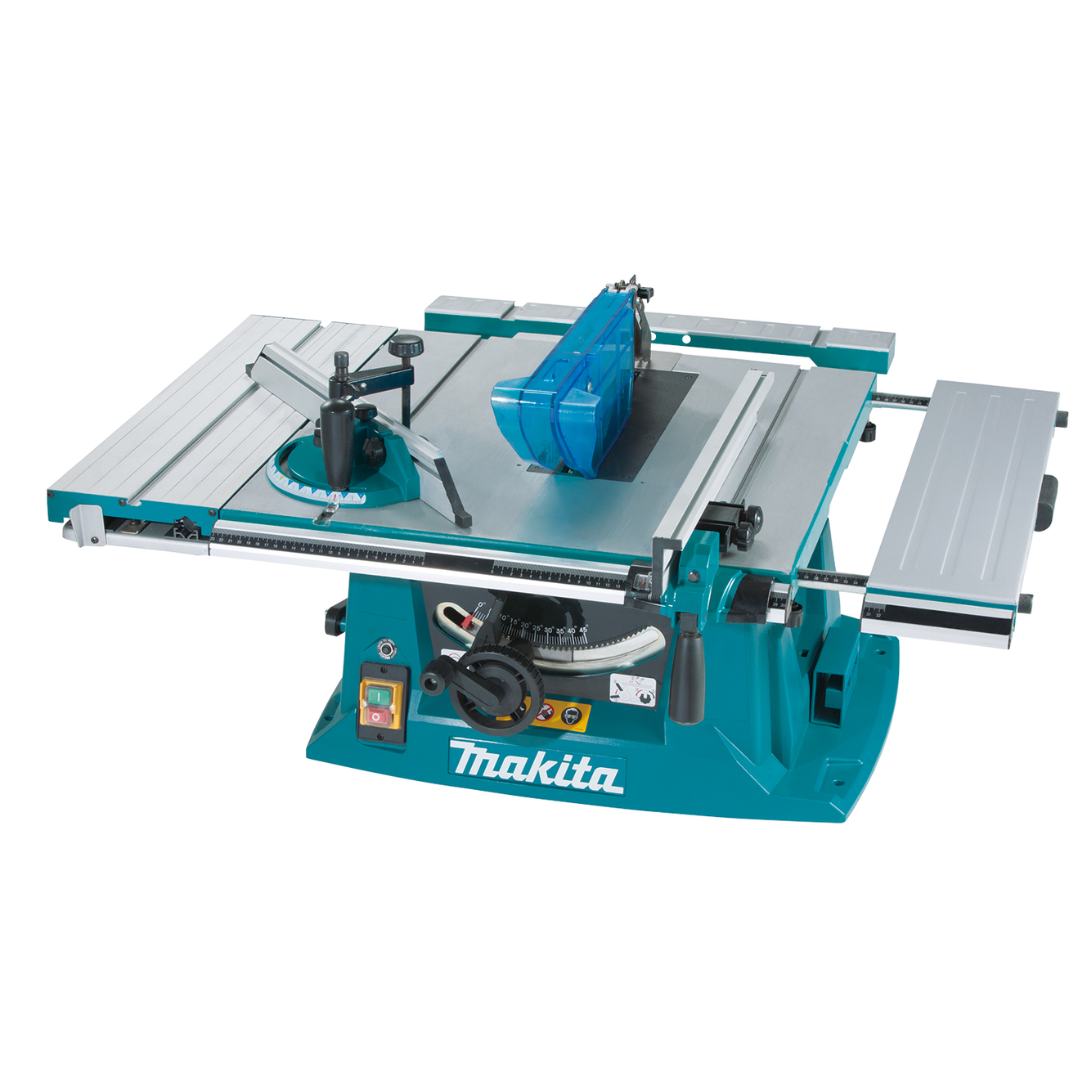
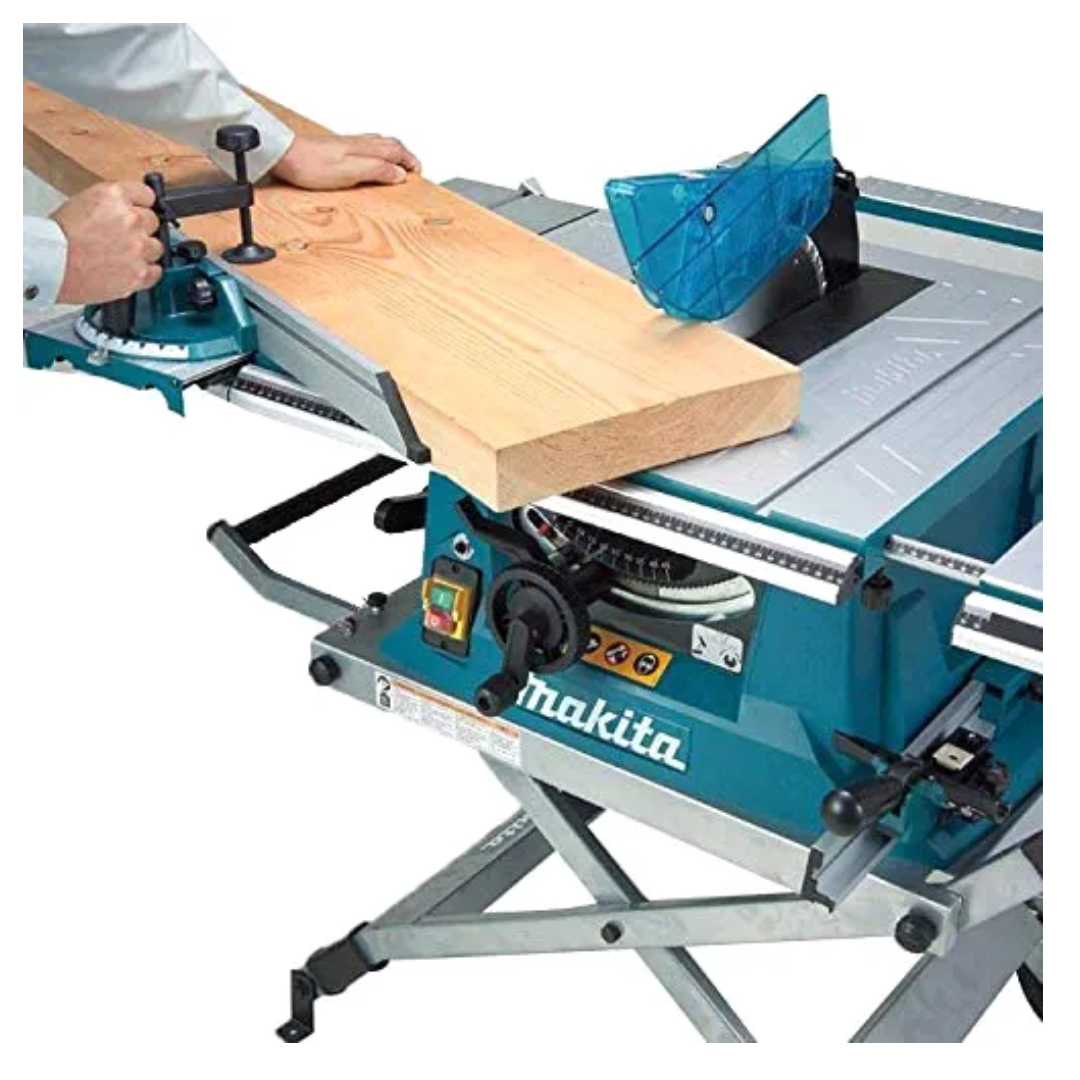
A table saw (also known as a bench saw or bench saw in England) is a woodworking tool, consisting of a circular saw blade, mounted on an arbor, that is driven by an electric motor (either directly, by belt, or by gears). The blade protrudes through the top of a table, which provides support for the material, usually wood, being cut.
In most modern table saws, the depth of the cut is varied by moving the blade up and down: the higher the blade protrudes above the table, the deeper the cut that is made in the material. In some early table saws, the blade and arbor were fixed, and the table was moved up and down to expose more or less of the blade.
The angle of cut is controlled by adjusting the angle of blade. Some earlier saws angled the table to control the cut angle.
45° Miter capacity with adjustable fence: Allows for quick and accurate miter cuts without flipping heavy material.
Large spindle lock button: Make quick and easy blade changes wearing gloves.
Size: 10-4/1".
Quick-adjust vise clamp: Adjusts quickly for different material sizes.
All-ball-bearing construction: Delivers maximum durability.
Powerful 15-amp, 4.0 maximum horsepower motor: Delivers maximum cutting performance in various materials.
Large cutting capacity: Accommodates a wide range of cutting applications up to 5".
Durable, lightweight design: Permits portability without sacrificing durability.
Oversized wheel guards: Provides added protection from debris.
A table saw (also known as a bench saw or bench saw in England) is a woodworking tool, consisting of a circular saw blade, mounted on an arbor, that is driven by an electric motor (either directly, by belt, or by gears). The blade protrudes through the top of a table, which provides support for the material, usually wood, being cut.
In most modern table saws, the depth of the cut is varied by moving the blade up and down: the higher the blade protrudes above the table, the deeper the cut that is made in the material. In some early table saws, the blade and arbor were fixed, and the table was moved up and down to expose more or less of the blade.
The angle of cut is controlled by adjusting the angle of blade. Some earlier saws angled the table to control the cut angle.