1–3 business days (Dubai) | 3–5 business days (Other Emirates)
Returns:
14-day returns (conditions apply)
Product Overview
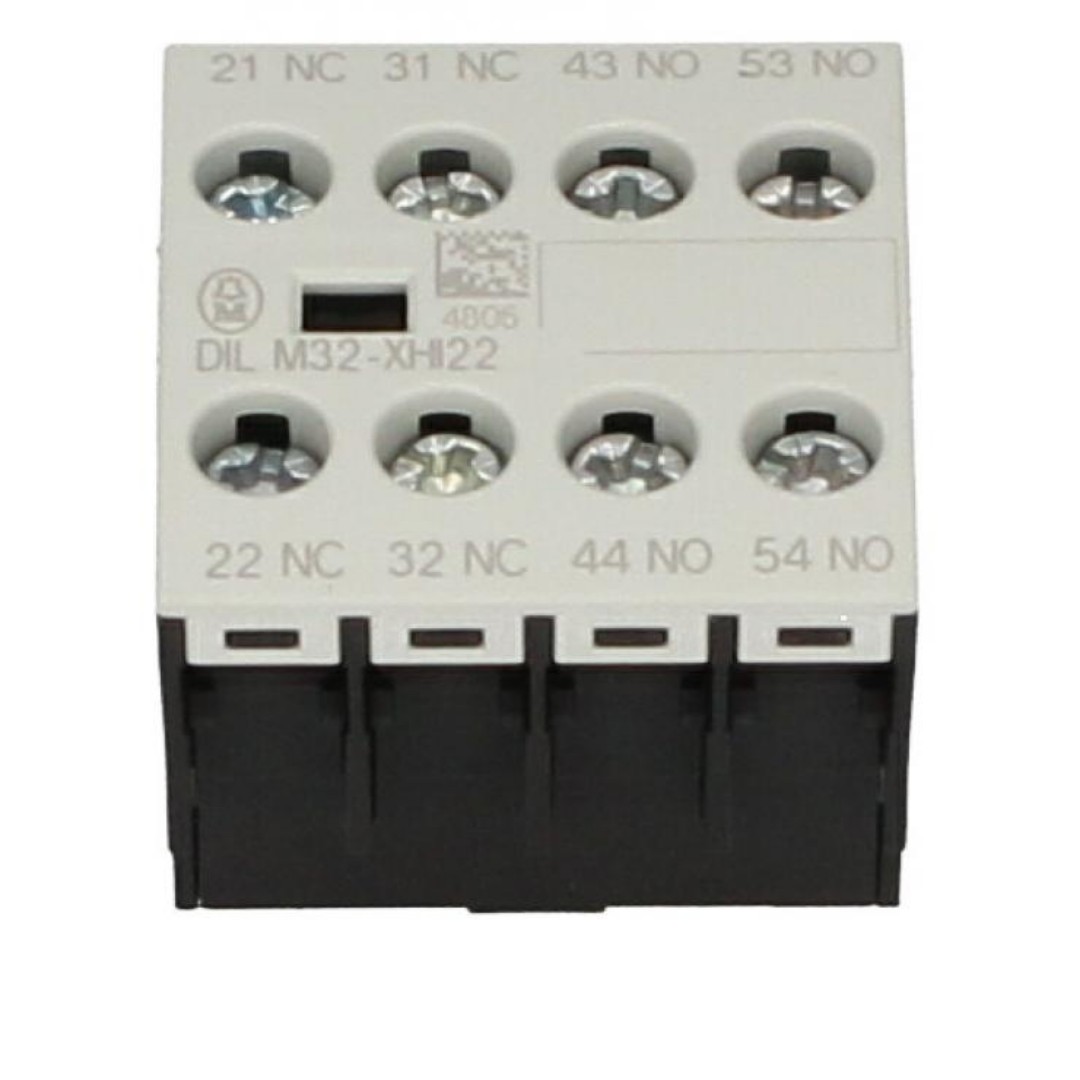
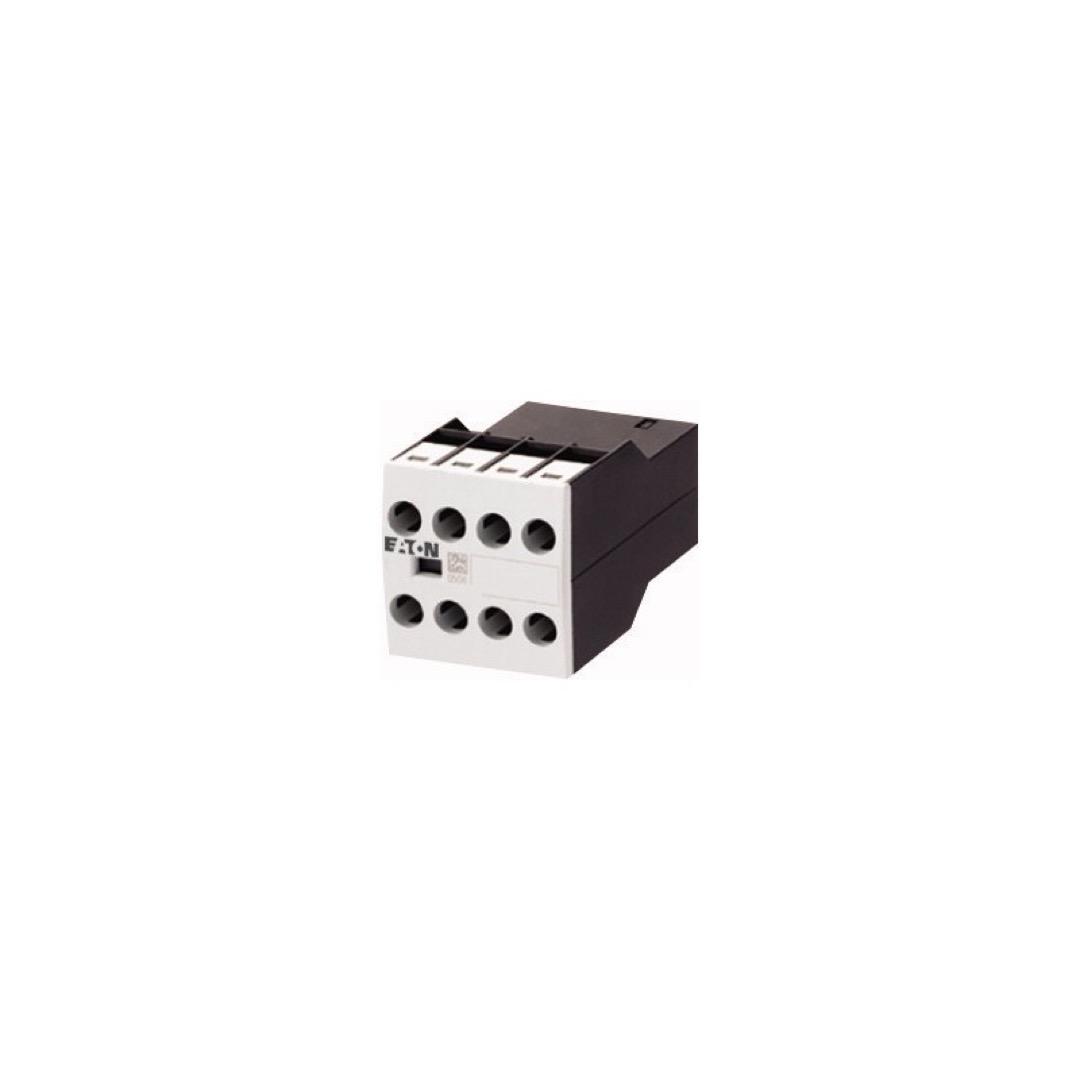
The EATON Auxiliary Contact Module is an electrical device commonly used in control circuits of various industrial equipment, such as motor starters, contactors, and circuit breakers. Its primary purpose is to provide additional contacts that are mechanically linked to the main switching mechanism. The auxiliary contact module is typically attached or installed onto the main control device and is designed to work in conjunction with it. It is a compact unit that consists of one or more sets of auxiliary contacts, which can either be normally open (NO) or normally closed (NC). These contacts are electrically isolated from the main power contacts of the device but move in synchronization with them. When the main control device, such as a contactor or motor starter, is actuated and switches its primary contacts to turn a motor or other loads on or off, the auxiliary contacts also change their state accordingly. This allows the auxiliary contact module to provide feedback or control signals to other components in the circuit. It is especially useful for applications that require interlocking, monitoring, or signaling functions.
In motor control circuits, auxiliary contacts can be used to ensure that certain operations happen in a specific sequence. For example, when one motor is running, the auxiliary contact can prevent the start of another motor until the first motor stops. The auxiliary contacts can be used to send signals to indicator lights, alarm systems, or other monitoring devices, indicating the status of the main control device. For instance, an auxiliary contact might indicate that a motor has overheated or a circuit breaker has tripped. In complex control systems, auxiliary contacts can be used to implement specific logic functions or feedback loops, enabling more sophisticated control over the equipment. Auxiliary contacts can be integrated into safety circuits to ensure that certain safety conditions are met before allowing the main control device to operate.
These auxiliary contacts are designed to handle lower current and voltage levels than the main power contacts, as they are primarily used for signaling and control purposes rather than for directly switching heavy loads. It's essential to select the appropriate auxiliary contact module that matches the main control device and fulfills the specific requirements of the application.
Features
Length: The Auxiliary contacts has 45 millimetre length.
Height: The Auxiliary contacts has 38 millimetre height.
Width: The Auxiliary contacts has 36 millimetre width.
Weight The Auxiliary contacts weighs 0.048 kilogram.
Number of poles: The Auxiliary contacts has four pole.
Electric connection type: The Auxiliary contacts has Screw type electric connection.
Benefits
Enhanced Control and Monitoring: Auxiliary contact modules provide additional control capabilities, allowing for more sophisticated and flexible control over industrial equipment. They enable interlocking, signaling, and monitoring functions, enhancing the overall efficiency and safety of the system.
Improved Safety: Incorporating auxiliary contacts into safety circuits adds an extra layer of protection by ensuring that certain safety conditions are met before the main control device can be activated. This helps prevent accidents and protects both equipment and personnel.
Cost-Effective: Auxiliary contact modules are relatively inexpensive compared to the main control devices they complement. By using auxiliary contacts, you can add advanced control and monitoring features to existing systems without the need for costly upgrades.
Space-Saving: These modules are designed to be compact and space-efficient, making them easy to integrate into control panels or enclosures. They don't require a lot of additional room, making them suitable for installations where space is limited.
Simplified Wiring: Using auxiliary contacts can simplify the wiring of complex control systems. They allow you to centralize control logic and feedback mechanisms, reducing the number of individual wires needed.
Versatility: Auxiliary contact modules are versatile and can be used in various applications, such as motor starters, contactors, circuit breakers, and other electrical control devices. They can be easily adapted to meet specific requirements in different industrial settings.
Reduced Wear and Tear: By using auxiliary contacts for signaling and control purposes, the main power contacts of the control devices experience less wear and tear. This can prolong the lifespan of the primary switching components, reducing maintenance costs over time.
Quick Troubleshooting: Incorporating auxiliary contacts can aid in troubleshooting and diagnosing issues within the control system. The status of the auxiliary contacts can provide valuable information about the state of the equipment, helping technicians identify problems more efficiently.
Modular Design: Many auxiliary contact modules are designed to be modular, meaning you can add or remove contacts as needed, depending on the complexity of the control system. This scalability allows for easy customization to match specific application requirements.
Compatibility: Auxiliary contacts are typically designed to be compatible with a wide range of control devices from various manufacturers, making them readily available and easy to integrate into existing systems.
Technical Specifications
The EATON Auxiliary Contact Module is an electrical device commonly used in control circuits of various industrial equipment, such as motor starters, contactors, and circuit breakers. Its primary purpose is to provide additional contacts that are mechanically linked to the main switching mechanism. The auxiliary contact module is typically attached or installed onto the main control device and is designed to work in conjunction with it. It is a compact unit that consists of one or more sets of auxiliary contacts, which can either be normally open (NO) or normally closed (NC). These contacts are electrically isolated from the main power contacts of the device but move in synchronization with them. When the main control device, such as a contactor or motor starter, is actuated and switches its primary contacts to turn a motor or other loads on or off, the auxiliary contacts also change their state accordingly. This allows the auxiliary contact module to provide feedback or control signals to other components in the circuit. It is especially useful for applications that require interlocking, monitoring, or signaling functions.
In motor control circuits, auxiliary contacts can be used to ensure that certain operations happen in a specific sequence. For example, when one motor is running, the auxiliary contact can prevent the start of another motor until the first motor stops. The auxiliary contacts can be used to send signals to indicator lights, alarm systems, or other monitoring devices, indicating the status of the main control device. For instance, an auxiliary contact might indicate that a motor has overheated or a circuit breaker has tripped. In complex control systems, auxiliary contacts can be used to implement specific logic functions or feedback loops, enabling more sophisticated control over the equipment. Auxiliary contacts can be integrated into safety circuits to ensure that certain safety conditions are met before allowing the main control device to operate.
These auxiliary contacts are designed to handle lower current and voltage levels than the main power contacts, as they are primarily used for signaling and control purposes rather than for directly switching heavy loads. It's essential to select the appropriate auxiliary contact module that matches the main control device and fulfills the specific requirements of the application.